
When the floods took over Mathare
In early 2024, heavy rains fell across Mathare through the night. What began as ordinary rainfall quickly turned into one of the most devastating floods many residents had ever witnessed. Families woke up to screams, rushing water, collapsing homes, and darkness filled with fear. By morning, lives had changed completely. Homes were swept away, businesses destroyed, schools interrupted, and sadly, lives were lost. But beyond the visible destruction of houses and roads, there was another crisis that many people could not see: the mental and emotional impact left behind.
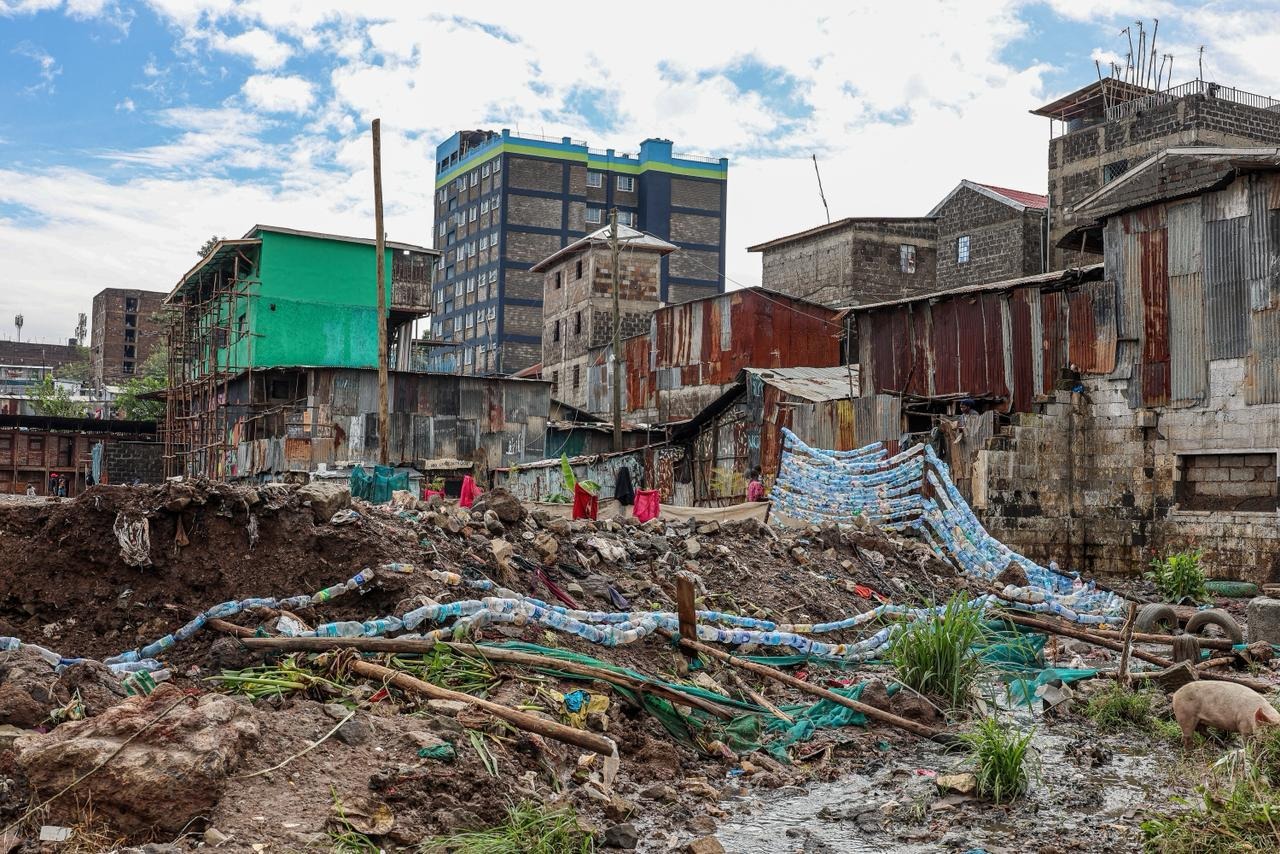
The hidden crises beyond the Flood(the silent struggles of men, women, youth, and the elderly)
For many men, the floods brought feelings of helplessness and pressure. Society often expects men to remain strong no matter the situation, yet many silently struggle with fear, stress, and shame after losing everything they had worked for.
One man, whom I will call David, watched floodwaters destroy his small business and home within hours. Unable to provide for his wife and children, he disappeared for several weeks after the floods. Later, he admitted that he had left because he felt like a failure. He did not know how to face his family after losing everything. The emotional burden had become too heavy for him to carry alone.
Another resident, James, remained physically present with his family but emotionally withdrawn. He rarely spoke and spent most days sitting quietly, overwhelmed by thoughts of school fees, food, rent, and where his family would sleep next. During one session, he finally opened up and said, “I thought being a man meant solving everything alone. I did not know I was slowly breaking inside.”
Women were equally affected, often carrying both emotional and caregiving responsibilities during the crisis.
One woman, Mary, struggled after her husband abandoned her and their children shortly after the floods. Left with no income, no stable shelter, and children depending on her, she described feeling emotionally exhausted and hopeless. She shared how difficult it became trying to appear strong for her children while silently battling fear and stress each day.
Another woman, Aisha, had managed to save her sewing machine during the floods by leaving it with a friend for safekeeping. The sewing machine was her only source of income. However, weeks later, she discovered that the friend had sold it without her permission. Beyond losing her livelihood, she also lost a friendship she deeply trusted. The betrayal left her emotionally distressed, anxious, and uncertain about how she would rebuild her life.
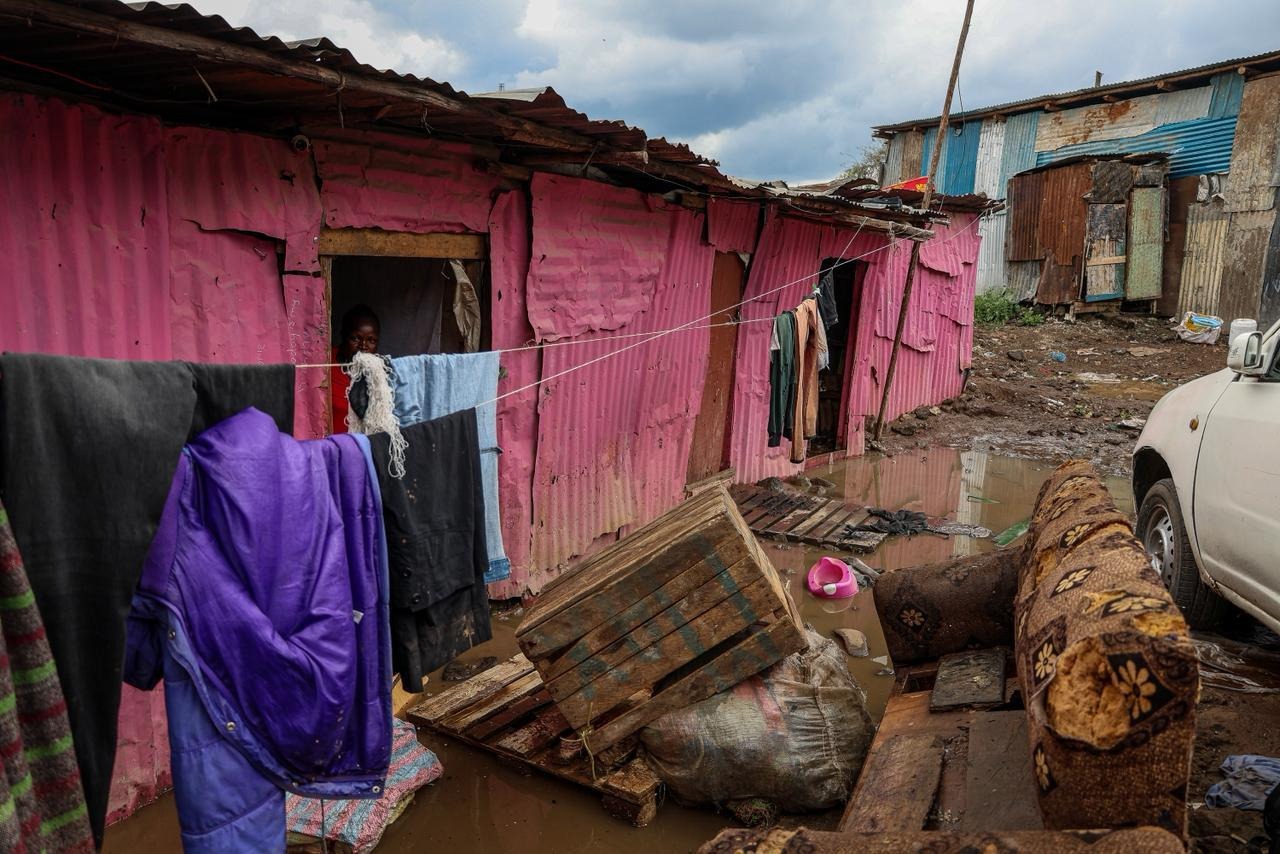
Youth within the community also faced severe emotional struggles. Many young people lost direction, opportunities, and hope during the recovery period.
One young man, Kevin, turned to drugs as a way of escaping the pain and stress caused by the floods. He explained that substances temporarily helped him forget the hunger, uncertainty, and trauma surrounding him. Like many youths, he lacked emotional support and healthy coping mechanisms during the crisis.
Others became involved in theft and risky survival behaviors. Some youths began stealing iron sheets from damaged structures to sell for small amounts of money to buy food. For many of them, survival had become more urgent than thinking about consequences.
The floods also deeply affected elderly persons and people living with disabilities. Many were unable to move quickly during the disaster and depended on others for safety and support.
An elderly woman, Mama Grace, was left stranded for days because she had no close family nearby to assist her. She described feeling forgotten and invisible as people focused on rescuing themselves and their immediate families. Some people living with disabilities shared similar experiences, saying that evacuation centers and support systems rarely considered their specific needs. The emotional pain of abandonment and isolation became just as heavy as the physical struggles they faced.
As these stories continued to emerge within the community, it became clear that healing needed to go beyond rebuilding homes. People needed safe spaces to process grief, fear, trauma, stress, and loss.
The Tabasamu cafe
Through the support of Tabasamu Cafe, SDI Kenya – Muungano wa Wanavijiji, and Basic Needs Basic Rights Kenya, a community mental health support program was introduced to help residents begin their healing journey.
The Tabasafe Café is a safe space we are creating for communities. It was inspired by the Tabasamu Cafe model, which has guided and demonstrated to us how such spaces can be established and managed. The safe space was designed to encourage communities to openly talk about mental health and climate change.
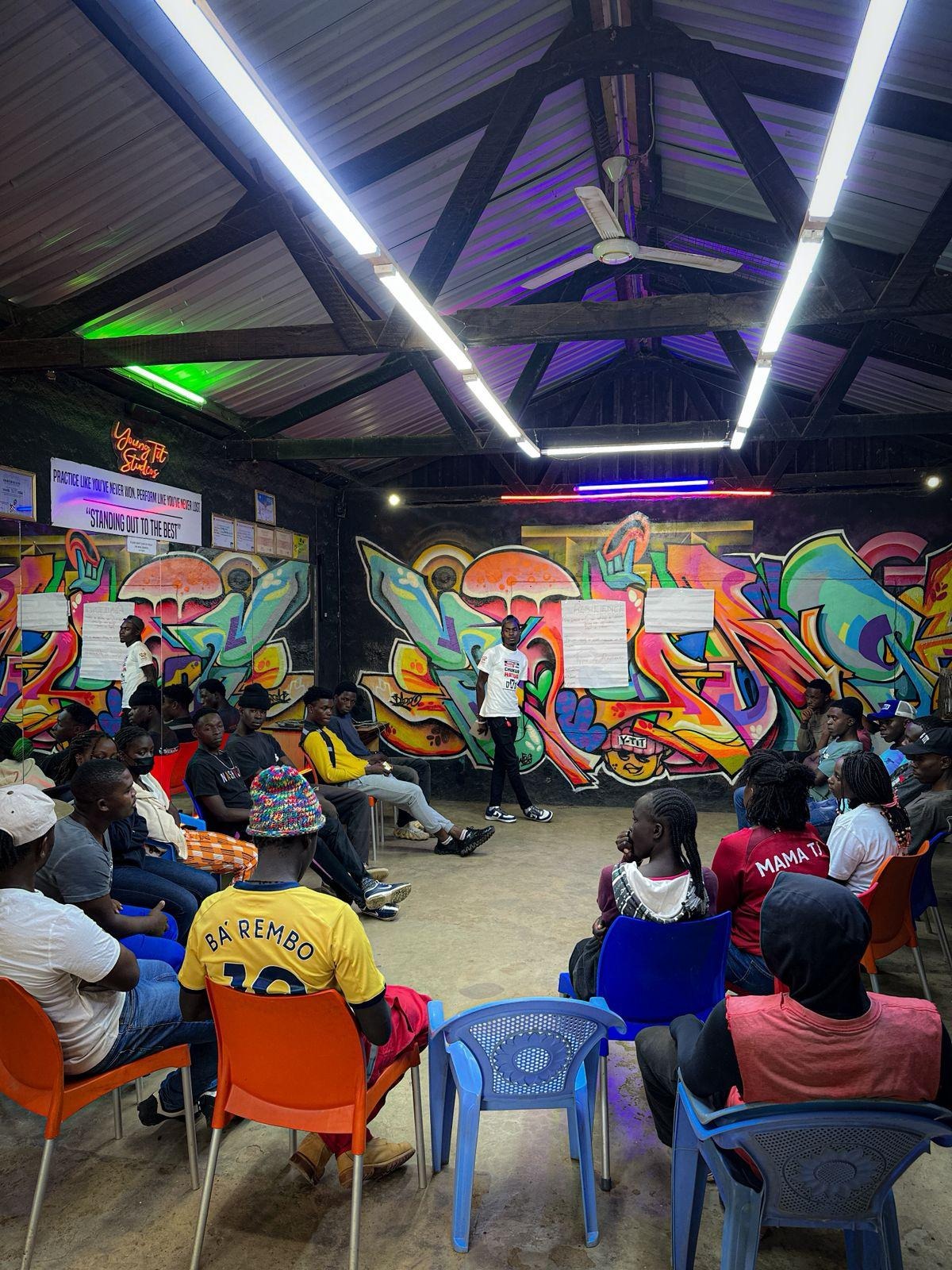
Ongoing Tabasamu Cafe.
I was honored to serve as one of the youth mental health facilitators in the program. Twice every month, we organized free safe-space sessions where community members could openly speak about their experiences, fears, grief, and struggles without judgment. At first, many people were hesitant. Some did not understand the connection between mental health and climate change, and others believed mental health only concerned people considered “crazy.”Others, especially men, feared appearing weak if they expressed emotions publicly. Some women were also embarrassed to share their feelings, especially when there was a mixed-gender group.
However, with time, the sessions slowly changed how people viewed mental health. Men began opening up about pressure and emotional exhaustion. Women shared their fears and frustrations. Youth spoke honestly about substance abuse, hopelessness, and survival struggles. Elderly persons expressed feelings of abandonment and loneliness.
What stood out most was how powerful listening proved to be. Sometimes, people did not need immediate solutions; they simply needed someone willing to hear them without judgment. Furthermore, as facilitators, we used simple, everyday language in mental health conversations to build trust among community members.
We also shared common words and phrases that the community could easily understand to support access to the online toll-free telehealth care services. This initiative was supported by One2One under the LVCT Health. Some of the key phrases used were “ngori” (trouble), “hali si hali” (things are not okay), “nyuria” (suicidal thoughts), and “niokolee” (help me out). These strong and relatable expressions helped speed up and strengthen responses through the One2One digital mental health services.
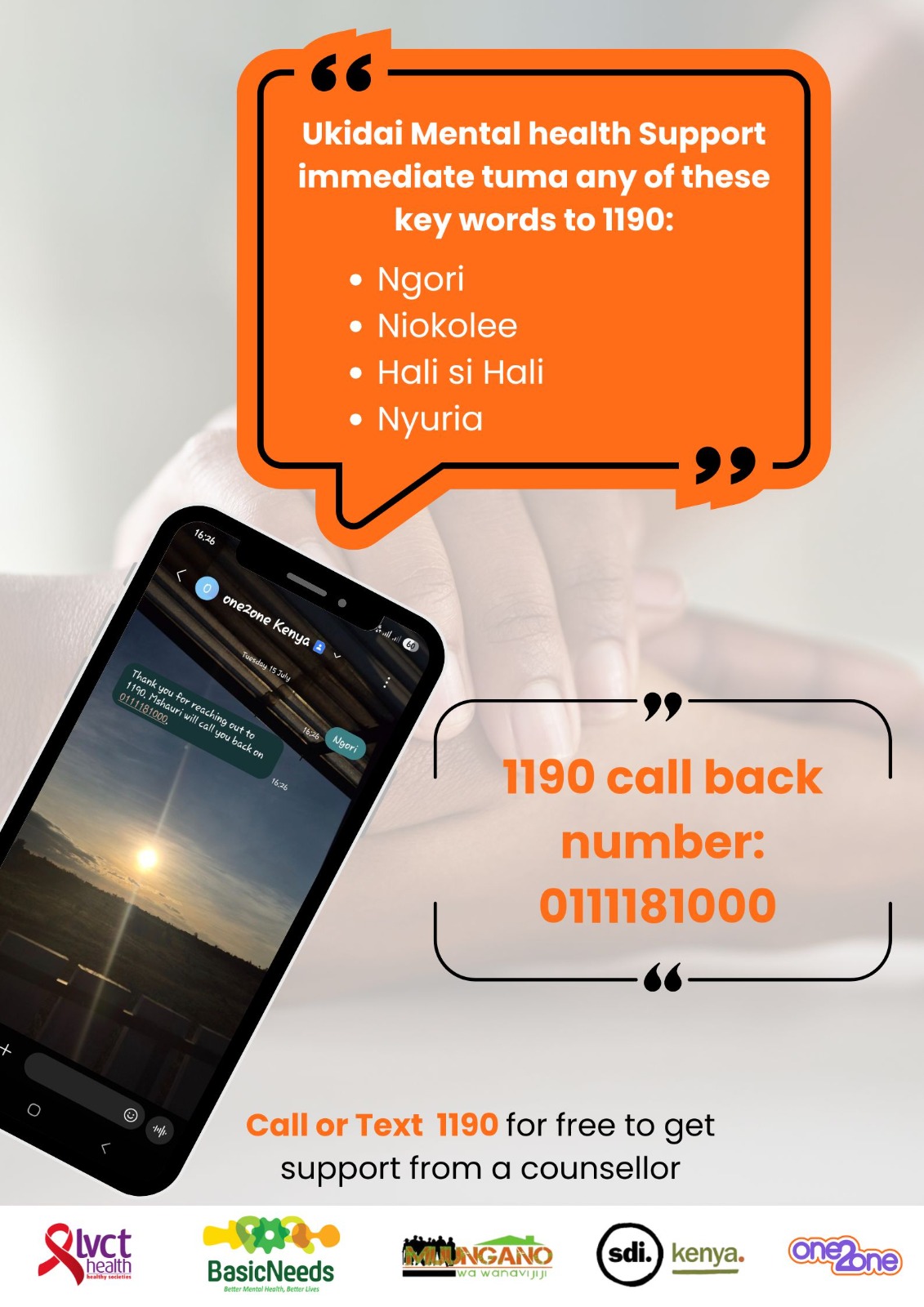
Poster created by the One2One team to support awareness.
Understanding how to translate conversations into local languages is important. It is part of the knowledge brokering skills that I was able to learn from SSN. I take these skills to the community, hoping they will shift how people respond to problems, especially when we are talking about climate change and mental health.
The sessions also helped community members understand that mental health is just as important as physical health. Trauma, stress, anxiety, grief, and depression are real experiences that deserve attention and support, especially after disasters caused by climate change.
Healing beyond rebuilding homes.
The floods may have destroyed homes and livelihoods, but they also revealed the importance of community healing, empathy, and mental health awareness. They reminded us that recovery is not only about rebuilding structures; it is also about rebuilding people emotionally, mentally, and socially.
Today, many residents in Mathare continue rebuilding their lives step by step. While the scars of the floods remain, conversations around mental health have become more open and accepted within the community. Through collective support, safe spaces, and continued advocacy, healing is slowly becoming possible. Through this support, we hope to reach many more communities and strengthen healing efforts. The response may be slow, but progress is being made with certainty and hope.
This output was produced with the support of the Climate and Development Knowledge Network (CDKN) through a collaboration between SDI Kenya, Muungano wa Wanavijiji, and SSN aimed at strengthening the knowledge brokering skills of Muungano's youth leaders.


What happens when young people map their own communities? In Mathare, it means more than better data, it means new skills, new confidence, and new pathways into work. This story traces how community-led data is evolving into a tool not just for advocacy, but for livelihoods.

In this piece, Jacob Omondi, Jackline Waithaka, and Jane Wairutu discuss the profound impact of COVID-19 on youth in informal settlements like Mathare, Nairobi. The pandemic has exacerbated job losses and financial instability, particularly affecting those in the informal economic sector, where many young people rely on daily earnings from their businesses.

In Loitoktok, Kajiado County, a women’s group is transforming lives through resilience and innovation. With support from the Next Level Grant Facility under Voices for Just Climate Action, they’ve expanded urban farming and beekeeping, proving the power of collective action in climate adaptation and economic empowerment.
Join our newsletter to stay up to date on news and projects.
By subscribing you agree to our privacy policy and provide consent to receive updates from our organization.
.svg)


