

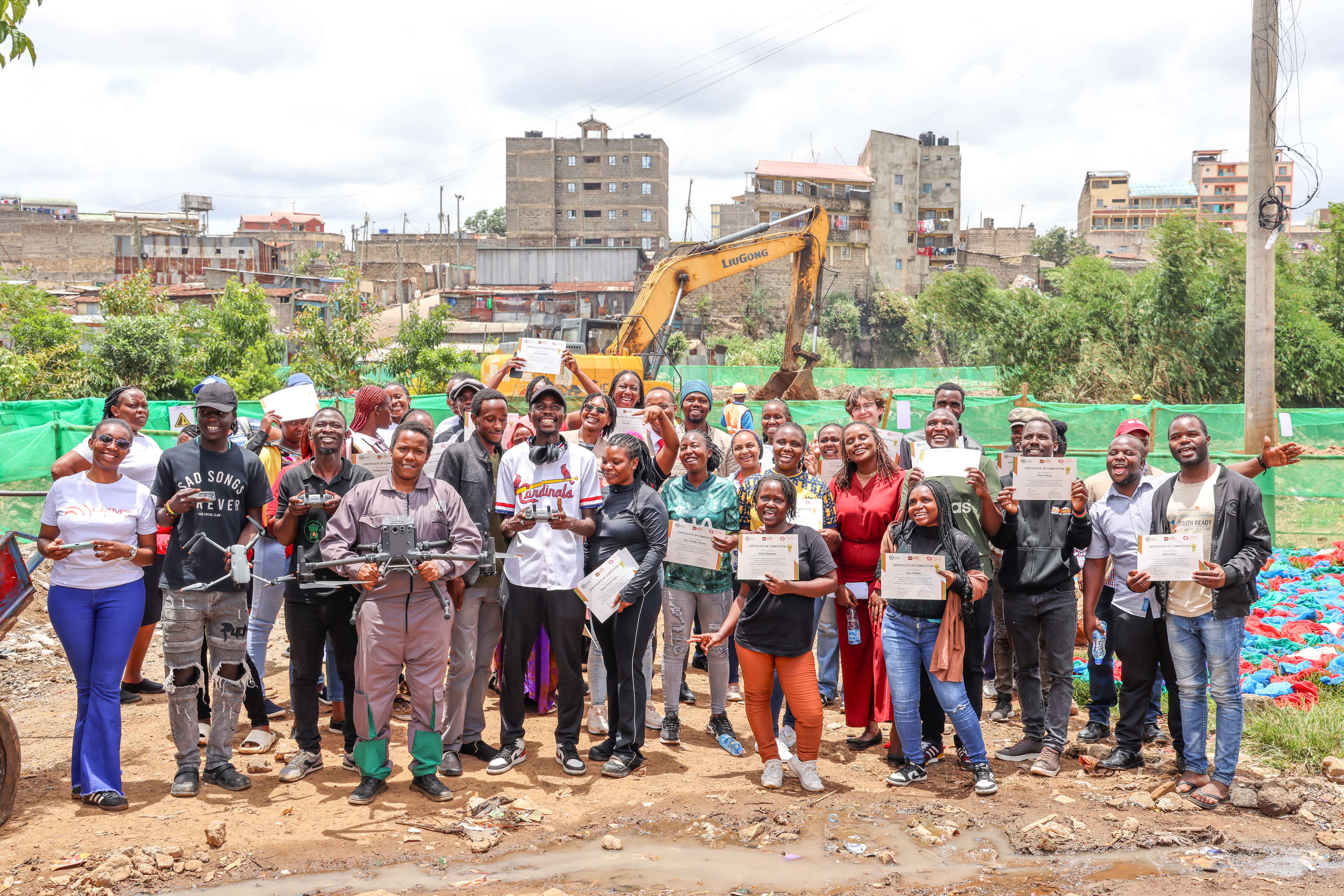
For 30 years, Muungano wa Wanavijiji has held on to its rituals, savings, peer-to-peer exchange, and community-led data. This is how organizing happens, how communities come together, define their priorities, and act.
And at the center of it all? Data. Because in informal settlements, what is not counted is often not seen. And what is not seen is rarely planned for. Community-led data has always been our way of pushing back against that invisibility. It is how communities sit at the table as negotiators. We saw this in the Mukuru Special Planning Area, where data collected by residents themselves became the foundation for engagement with the government, shaping how the settlement could be planned and upgraded.
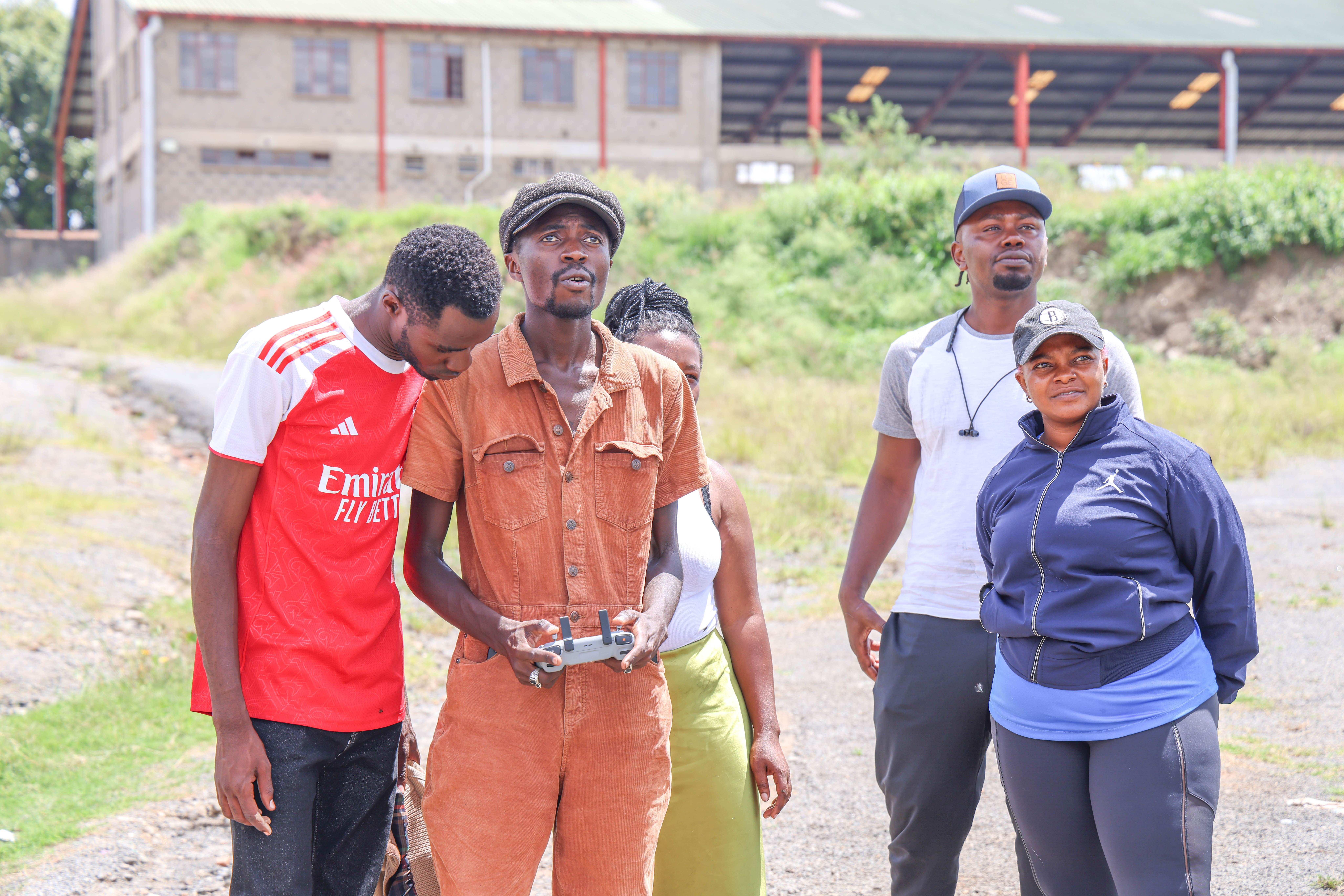
So when youth from Mathare showed up for 10 days of training supported under the Dr. Sulley Gariba, SDI Impact Innovation Initiative, this is what they were stepping into. When we kicked off this training, our goal was simple: to equip young people with drone mapping and geospatial skills that they can use to transform their communities and their own livelihoods. Through this training partnership led by the Humanitarian OpenStreetMap Team and SDI Kenya, the youth can now map their settlements, generate evidence about their communities, and drive real solutions from the ground up
What is even more encouraging and emerging as a key insight is how vocal the youth have been about what this training and project mean to them. From their reflections, it is clear that they see these skills as going beyond just training outputs but as real pathways into opportunity. They open doors to digitization work, mapping contracts, and active participation in the growing knowledge economy, ultimately translating technical capacity into tangible livelihoods, while also equipping them to identify service gaps within their settlements and use data as leverage to engage and negotiate for improved services for their communities.
“Nimeona mali mbili tatu, naweza pata maziwa nikiendelea kufanya drone.” Alan, Muungano Youth, Mathare
(“I’ve already seen two or three opportunities; I can earn a living if I keep doing drone work.”)
And it doesn’t stop there. They are now trainers, sparking a new wave of youth leaders. This first cohort of 40 youth will cascade skills to the remaining 38 participants through a structured trainers-of-trainees model.
“You are the best students I have ever met in my life. I’m so proud of you guys; now you are mappers and can explain your environment from a spatial perspective.” Walter, Humanitarian OpenStreetMap Team
“Maps are what will change the community. We must show them the issues, give them coordinates, and interpret the space.” Anne Wambui, Muungano Youth
.JPG)
Through a hands-on drone mapping training delivered in partnership with the Humanitarian OpenStreetMap Team and Kenya Flying Labs, Muungano youth from Mathare Valley began to reimagine what community data can look like. Yes, Muungano has always collected data. Walking through settlements, clipboard in hand, documenting realities that others overlook. But this time, the perspective shifted, literally.
Building on prior GIS skills, the youth were introduced to drone technology, photogrammetry, and satellite-based mapping. And it didn’t stay theoretical. Within days, they were in the field, flying drones, capturing imagery, mapping their own communities in real time. What used to take days of walking can now happen in hours. More precise. More detailed. More powerful.
“Before, we used to walk to collect data. Today, I can fly a drone, and from one sitting, I can collect data faster.” Allan, Youth Participant
And the shift is deeper than efficiency. This is about power. But it is also about livelihoods. Because when young people can map their own communities, they become knowledge entrepreneurs. And that knowledge has value.
“We are working with UNICEF to ensure that you are digitized… when work comes, you will be on top of that list.” David Lemayian Nakodony Eastern & Southern Africa Regional Director / Eastern & Southern Africa
“We need maps to do our jobs well. I'm glad you now have the skills.” Cindy wamalwa, World Vision
“In our office, drone pilots are heroes; we are only as good as the people we train. We have work, and you are the best people.” Swabira Abdulrazak, The Kenya Red Cross Society
The youth were onboarded into the OpenStreetMap community, connected to networks, and positioned to access opportunities as they emerge.


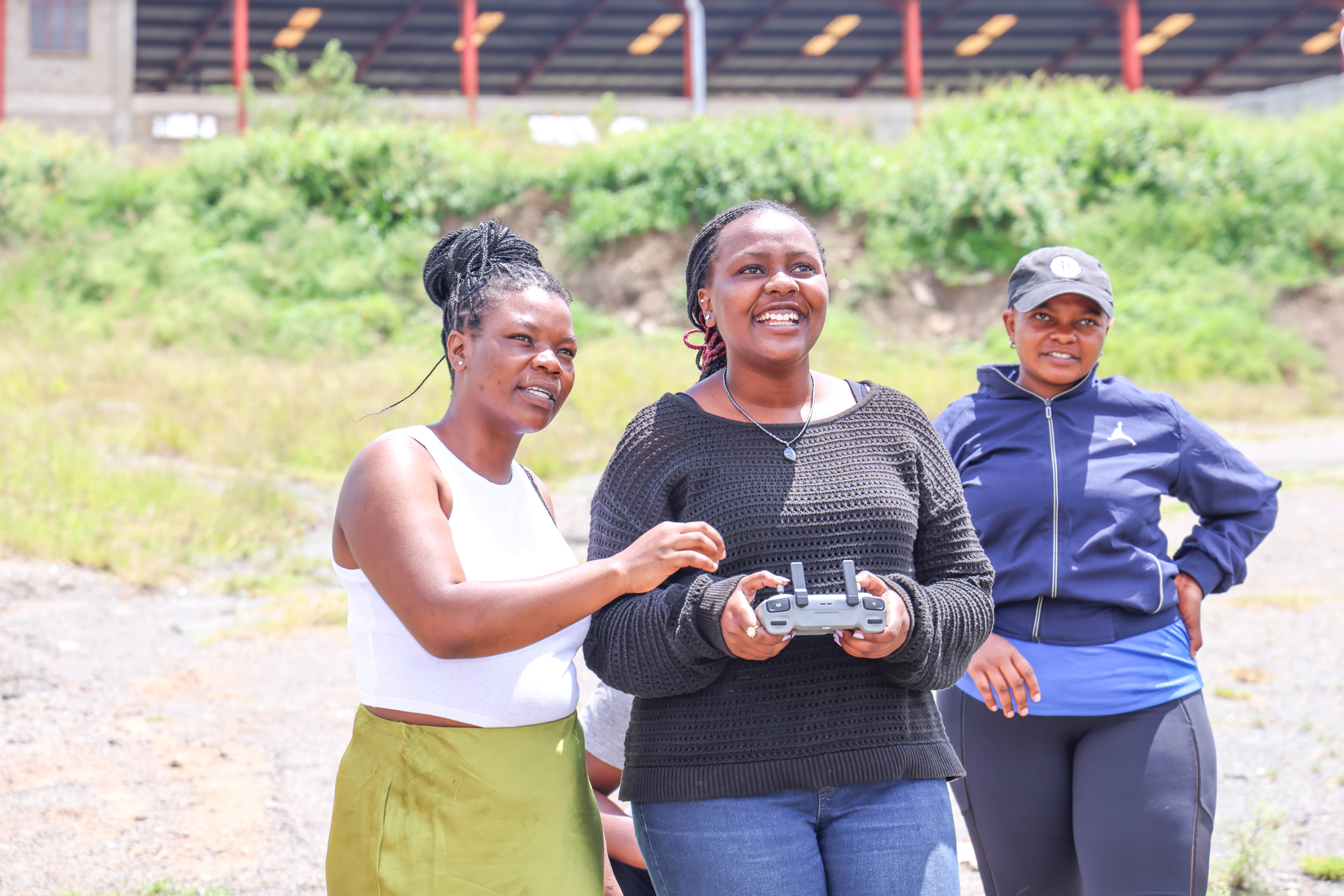
What happens when young people map their own communities? In Mathare, it means more than better data, it means new skills, new confidence, and new pathways into work. This story traces how community-led data is evolving into a tool not just for advocacy, but for livelihoods.

In this piece, Jacob Omondi, Jackline Waithaka, and Jane Wairutu discuss the profound impact of COVID-19 on youth in informal settlements like Mathare, Nairobi. The pandemic has exacerbated job losses and financial instability, particularly affecting those in the informal economic sector, where many young people rely on daily earnings from their businesses.

In Loitoktok, Kajiado County, a women’s group is transforming lives through resilience and innovation. With support from the Next Level Grant Facility under Voices for Just Climate Action, they’ve expanded urban farming and beekeeping, proving the power of collective action in climate adaptation and economic empowerment.
Join our newsletter to stay up to date on news and projects.
By subscribing you agree to our privacy policy and provide consent to receive updates from our organization.
.svg)


