
Jacob Omondi and Julia Washera
Mathare residents visited the Mukuru settlement to learn about the great story project on sanitation, including the introduction of the Simplified Sewer System in Mukuru, through an exchange aimed at knowledge sharing and community strategies on installation, community mobilization, and partnerships with different stakeholders.
Mukuru slums are among Kenya's largest informal settlements. It is characterized by a large population, leading to congestion and high demand for services such as adequate housing, sanitation, and drainage facilities, among others. Limited access to these critical services negatively affects residents, including disease outbreaks that can lead to death and poor disaster management. The limited access to sanitation facilities led to the declaration of Mukuru Special Planning Area. This led to a long process of advocacy and community-led planning, which resulted in piloting a simplified sewer system; the engagement took more than 2 years to implement, making it one of the first successful projects in Kenya.
Why was the approach of simplified sewer systems important to Mukuru residents given that there is limited space in the area? According to Benedicta, one of the exchange participants, “Simplified Sewer System is a low-cost, shallow-pipe wastewater network designed for high-density, low-income urban areas, costing up to 90% less than conventional systems. They utilize small-diameter pipes placed closer to households (often in shallow trenches), they reduce excavation needs, making them ideal for areas where deep sewer lines are impossible or too expensive.”
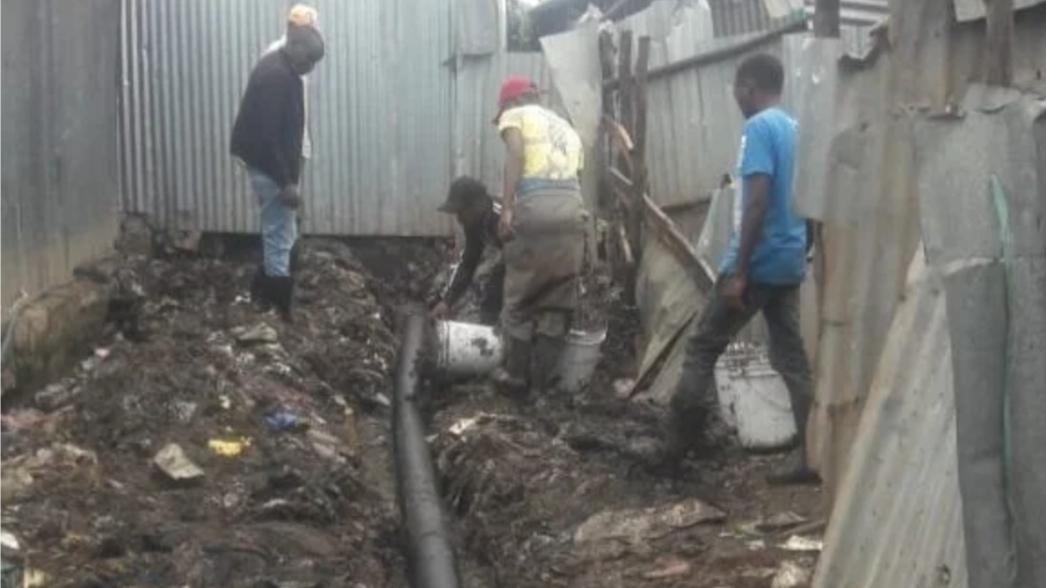
Community-driven construction of a simplified sewer system during Mukuru SPA
One of the project's most important aspects was affordability. In Mukuru, where many families survive on limited incomes, expensive infrastructure would simply not work. The simplified sewer system was therefore designed to be accessible to the people who needed it most. Each plot contributed about 5,000 Kenyan shillings, usually shared among around ten households living on the same compound. In many cases, landlords organized payments and coordinated with tenants to ensure the contribution was made. This shared investment created a sense of ownership. When people contribute even a small amount toward a project, it becomes something they want to protect and sustain.
According to Julie, one of the exchange participants, "Water availability also played a major role in shaping the project. Mukuru experiences frequent water rationing, and traditional sewer systems often depend on a reliable water flow to function effectively. Without that consistency, sanitation infrastructure can easily fail. The simplified sewer system was therefore adapted to the settlement's realities. It was designed to work with limited water, making it more practical and sustainable.
What makes the simplified sewer systems particularly unique is how they are managed; instead of being controlled entirely by external actors, community members manage the sanitation facilities connected to the sewer system. Both tenants and landlords help maintain the facilities and ensure they remain functional. Public toilets connected to the system typically charge a small fee of ten shillings per use. While this amount may seem small, it plays a critical role in covering maintenance costs and ensuring the facilities' sustainability.
Beyond sanitation, the project has also created opportunities for local employment. Some community members work as loaders and sanitation service providers, helping manage waste and maintain the system. These workers are often paid on commission, creating an additional source of income within the settlement. In this way, the project does more than improve infrastructure; it also strengthens the local economy.
Yet even in its unfinished state, the initiative represents something powerful. It shows that solutions to urban challenges do not always come from large-scale government and non-governmental organizations' projects alone. Sometimes they begin with ordinary residents deciding that the conditions they live in can be improved through collective effort. In Mukuru, the simplified sewer system is not only about pipes underground; it is about community agency, shared responsibility, and the belief that even in the most underserved places, change can begin from within.
The project also required the involvement of several stakeholders. Organizations such as Akiba Mashinani Trust and Muungano wa Wanavijiji supported community mobilization and helped residents organize themselves around the initiative. At the same time, collaboration with government institutions like the Nairobi City Water and Sewerage Company was essential to ensure that the system received the necessary technical guidance and approval. Structure owners also joined discussions, recognizing that sanitation improvements would benefit both landlords and tenants. These partnerships helped bridge the gap between community needs and institutional support.


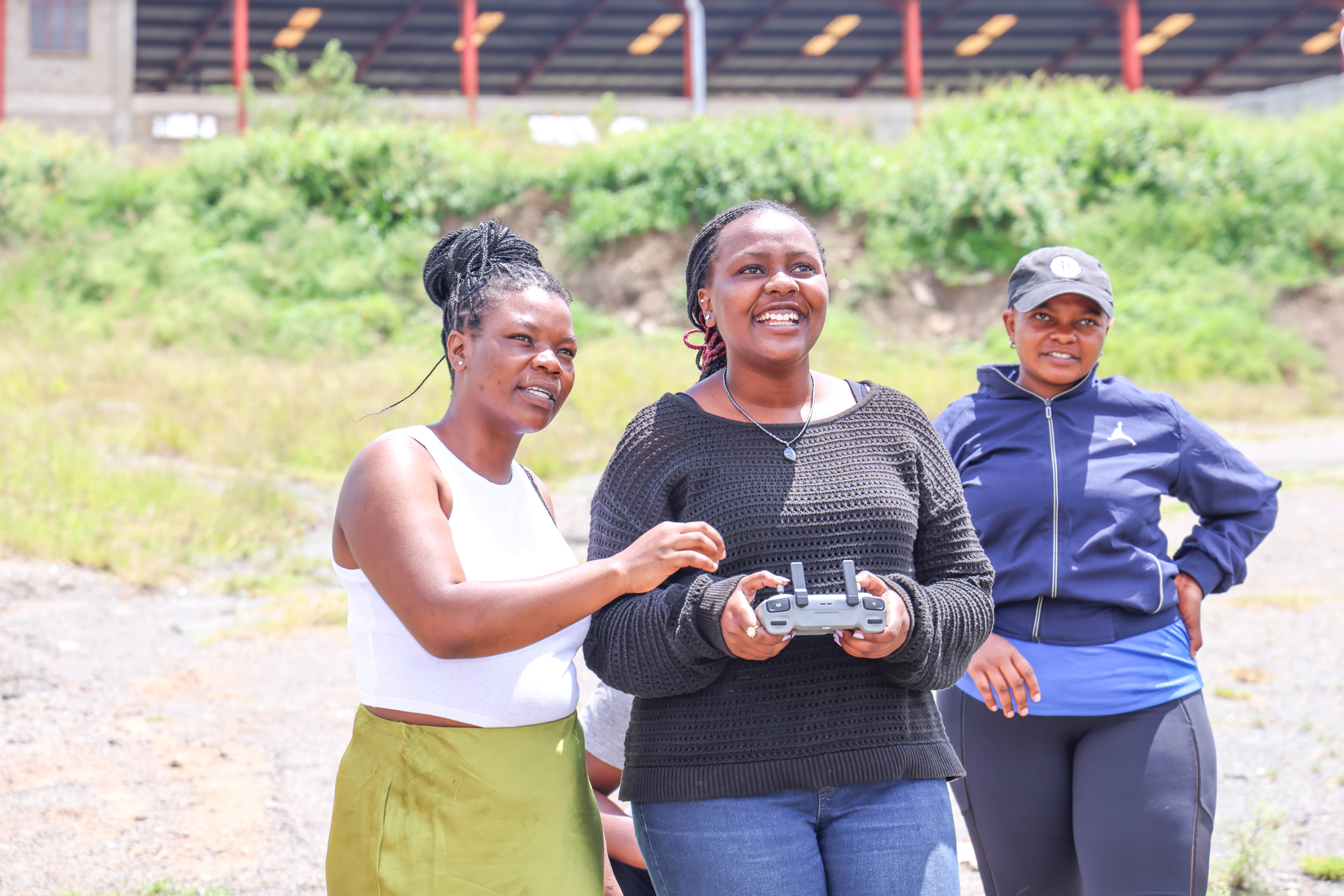
What happens when young people map their own communities? In Mathare, it means more than better data, it means new skills, new confidence, and new pathways into work. This story traces how community-led data is evolving into a tool not just for advocacy, but for livelihoods.

In this piece, Jacob Omondi, Jackline Waithaka, and Jane Wairutu discuss the profound impact of COVID-19 on youth in informal settlements like Mathare, Nairobi. The pandemic has exacerbated job losses and financial instability, particularly affecting those in the informal economic sector, where many young people rely on daily earnings from their businesses.

In Loitoktok, Kajiado County, a women’s group is transforming lives through resilience and innovation. With support from the Next Level Grant Facility under Voices for Just Climate Action, they’ve expanded urban farming and beekeeping, proving the power of collective action in climate adaptation and economic empowerment.
Join our newsletter to stay up to date on news and projects.
By subscribing you agree to our privacy policy and provide consent to receive updates from our organization.
.svg)


