

“When we start a business, people change how they used to view us and regard us as rich. But in a real sense, you’re struggling.” Ann Wambui
For many young people, being economically active does not necessarily mean being economically secure. In Kenya, young people represent one of the country’s greatest sources of energy, creativity and potential. Yet many continue to face significant barriers to employment and decent livelihoods.
The challenge is even more complex for young people living in informal settlements. Here, livelihoods are shaped by limited access to employment opportunities and markets, inadequate services and infrastructure, insecure incomes, lack of capital and unequal access to opportunities.
In Mathare, a youth livelihood study conducted by Muungano wa Wanavijiji and SDI Kenya under the Dr. Sulley Gariba SDI Impact Innovation Initiative found that about 7 in 10 respondents were working, while 3 in 10 were unemployed. But having work did not necessarily mean having a reliable income or making enough to get by. Many young people were creating their own opportunities through small businesses and other informal activities. Focus group discussions helped explain what this looks like in practice: running a business with limited capital, dealing with customers who buy on credit, weak networks, paying high transport costs and struggling to save. As one young entrepreneur put it, people may assume you are doing well simply because you have a business, yet the reality can be very different.
For young women, these barriers can be compounded by unpaid care and domestic responsibilities, discrimination and unequal access to financial resources. For young people living in communities that already experience exclusion, where you live can also influence how others perceive you, the opportunities you can access and the extent to which your voice is heard.
This is what made the theme of this year’s International Youth Day, “Different Contexts, Common Aspirations,” particularly significant. On 12 August, 30 Muungano youth joined other young people, government representatives, civil society organisations, community representatives and creatives to reflect on the issues shaping their lives and the aspirations they share.
Their circumstances may be different, but many of their aspirations are remarkably similar: to find meaningful opportunities, earn a decent living, be heard, feel secure and build a future they can believe in.
For the Muungano youth, these conversations were not abstract. They were already investigating the realities behind young people’s livelihoods in Mathare, generating evidence that could help inform discussions about the opportunities and barriers shaping their futures.
“Young people are not always engaged meaningfully. A lot of the time it is just tokenism. We collected our own data, analysed it, and now we are writing a report that we can use to engage policymakers.” Ann Wairimu
Ann Wairimu was one of the young people at the centre of the Youth Day conversations. A Youth Knowledge Entrepreneur under the Dr. Sulley Gariba SDI Impact Innovation Initiative, she represented young people from informal settlements on the event’s planning committee and later joined the panel discussion alongside representatives from Nairobi City County Government, the State Department of Youth Affairs, the National Youth Council, Kenya Red Cross, Muungano wa Wanavijiji, Nzumari Africa, Slum Dwellers Association and Refugee Legal Aid.
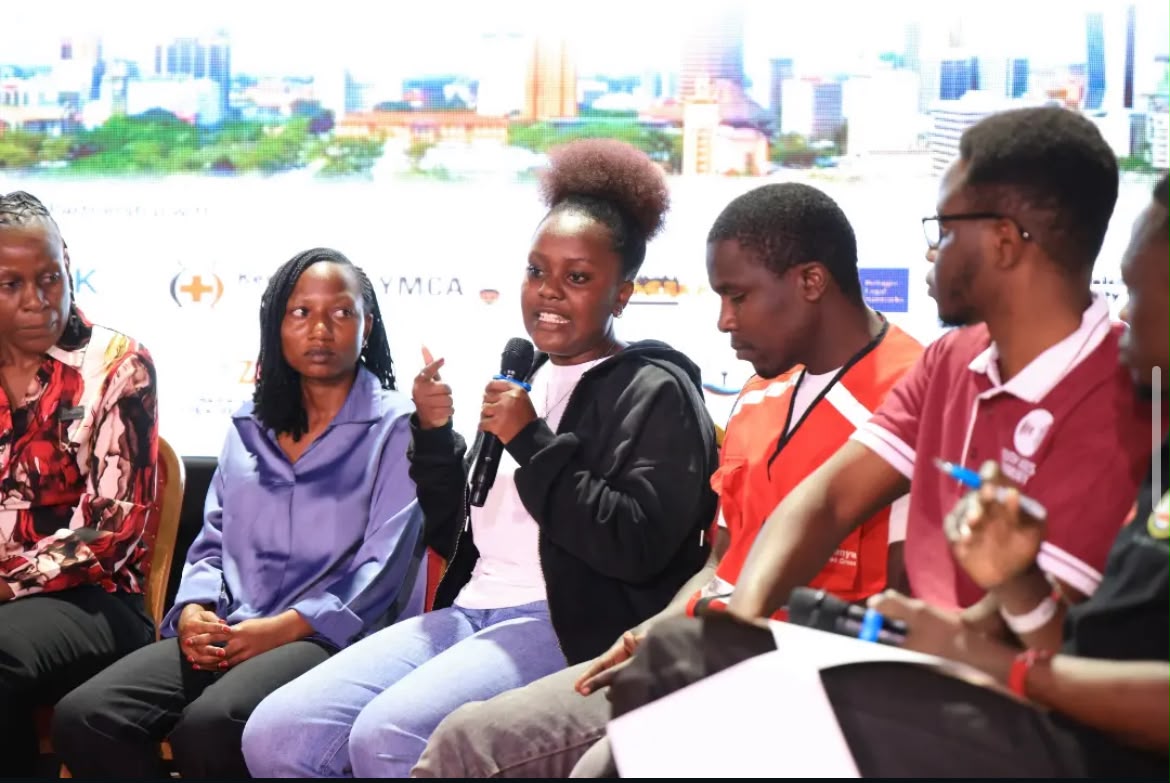
Her reflections speak to an important question: what does meaningful youth participation actually look like?
Young people are often invited to meetings and consultations to share their experiences and opinions. But participation can mean very different things. Are young people simply being given a seat in the room, or do they have the knowledge, evidence and agency to influence what happens there?
For the Dr. Sulley Gariba SDI Impact Innovation Initiative, this distinction matters. In Mathare, youth Knowledge Entrepreneurs have been involved in reviewing research tools, collecting data, analysing findings and interpreting what the evidence reveals about youth livelihoods. The process has given them an opportunity to move beyond describing their challenges to investigating them, understanding the findings and thinking about how the evidence can be used.
For Jacob Omondi, another youth co-researcher, the experience has changed what participation in research can mean.
“Being part of the research was really eye-opening, because now we can use the data to inform youth programming and begin having discussions about youth livelihoods in Mathare.” Jacob Omondi
The involvement of young people in analysing the data is particularly important. Their role does not end once the questionnaires have been completed and the data collected. By engaging directly with the datasets, they can explore what the findings reveal, connect them to their lived experiences and contribute to interpreting the realities behind the numbers.
This also means they can begin asking different questions. What opportunities exist within their communities? What prevents young people from turning their skills into sustainable livelihoods? Where are the gaps, and what could be done differently?
As Jacob explains:
“Instead of asking young people what they think about youth livelihoods, we have been in the process of finding out what is actually happening. It gives us something to bring to policymakers, programme designers and other decision-makers.”
The evidence gives young people a basis for asking better questions, challenging assumptions and engaging decision-makers on the realities shaping their livelihoods. It also provides a starting point for identifying opportunities and exploring solutions grounded in the experiences of the community.
For nearly three decades, Muungano wa Wanavijiji has used community-led data collection, savings and organising to make the realities of urban poor communities visible and advocate for issues around land, housing and essential services. Through the SDI Impact Innovation Initiative, young people are building on this legacy, applying community-led research to the questions that shape their own livelihoods and futures.
They are not waiting for others to define the challenges facing their communities or prescribe the solutions. They are asking their own questions, generating evidence and exploring how that knowledge can inform better opportunities for themselves and their communities.
The experience in Mathare also points to an important lesson for research and development programmes more broadly: young people should not only provide the data used to make decisions about their lives; they should also have a role in analysing it, interpreting what it means and shaping what happens next.
The challenge, then, is not only to create more opportunities for young people, but also to recognise them as partners in understanding the problems, identifying possibilities and shaping the solutions. Because meaningful participation is not simply about giving young people a seat at the table but ensuring they have the knowledge, voice and agency to help shape what happens there.


What happens when young people map their own communities? In Mathare, it means more than better data, it means new skills, new confidence, and new pathways into work. This story traces how community-led data is evolving into a tool not just for advocacy, but for livelihoods.

In this piece, Jacob Omondi, Jackline Waithaka, and Jane Wairutu discuss the profound impact of COVID-19 on youth in informal settlements like Mathare, Nairobi. The pandemic has exacerbated job losses and financial instability, particularly affecting those in the informal economic sector, where many young people rely on daily earnings from their businesses.

In Loitoktok, Kajiado County, a women’s group is transforming lives through resilience and innovation. With support from the Next Level Grant Facility under Voices for Just Climate Action, they’ve expanded urban farming and beekeeping, proving the power of collective action in climate adaptation and economic empowerment.
Join our newsletter to stay up to date on news and projects.
By subscribing you agree to our privacy policy and provide consent to receive updates from our organization.


