

For many young people living in informal settlements, finding a stable livelihood or decent employment is not easy. Limited economic opportunities, gaps in access to information and skills, and barriers to entering or growing businesses can make it difficult for young people to build secure livelihoods.
At the same time, young people living in these communities often have a deep understanding of the challenges they face and the opportunities that exist around them. The question is how to create opportunities for young people to turn this knowledge into action
This is where the Dr. Sulley Gariba SDI Impact Innovation Initiative comes in. The initiative was established to honour the legacy and vision of the late Dr. Sulley Gariba, who believed in the potential of young people, particularly young women, to become leaders and champions of positive change within their communities. Through the initiative, young people are supported to develop practical skills, generate and use knowledge, identify opportunities, and explore innovative solutions to challenges affecting their communities.
For us, this has meant learning to look at our communities in new ways, not only through our lived experiences, but also through data, technology, storytelling and innovation.
Equipping Youth to Map, Tell Stories, and Lead
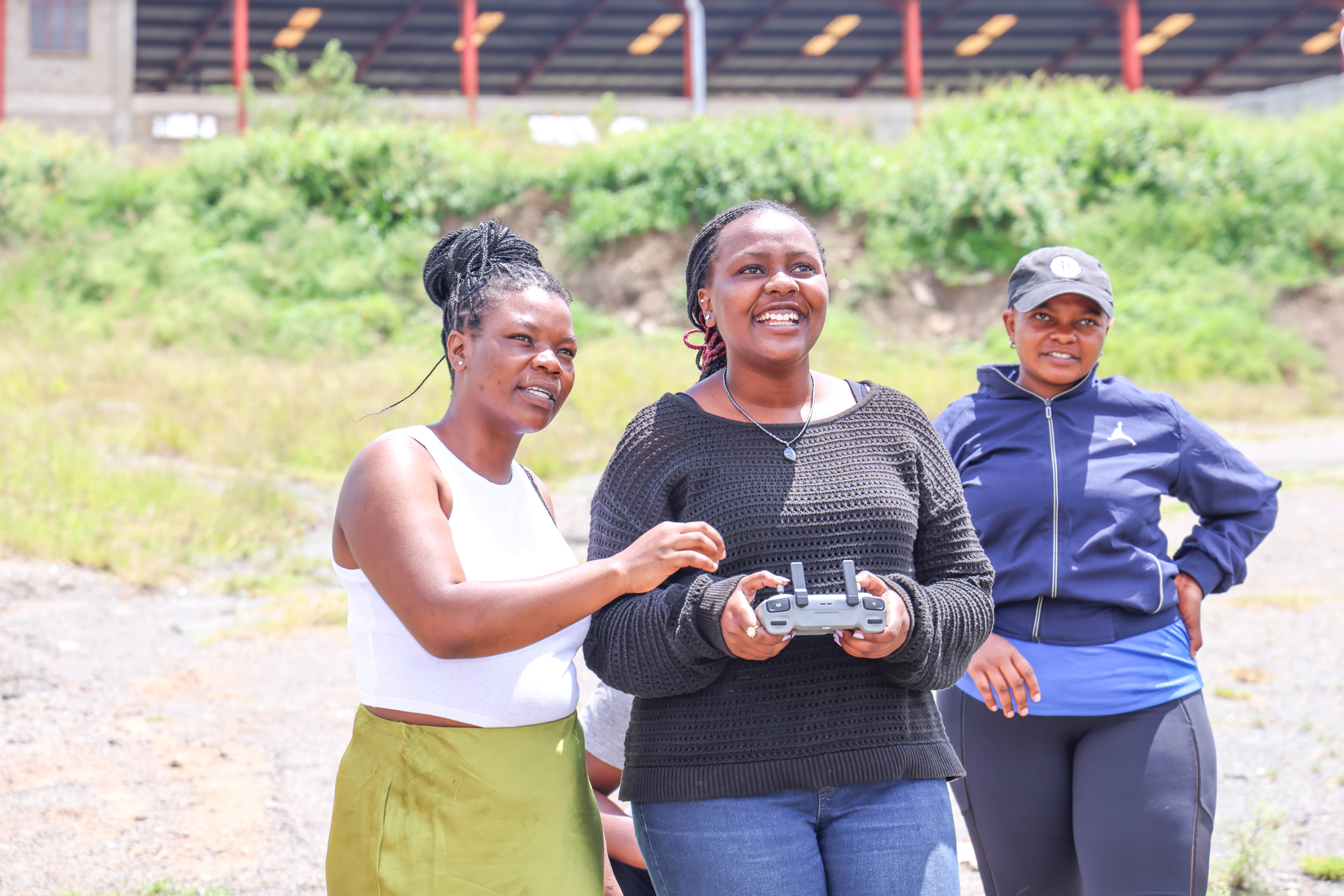
Through training and learning opportunities in drone technology, media and storytelling, citywide profiling, advocacy and value chain analysis, we have been building skills that can help us better understand community challenges, identify opportunities and contribute to solutions.
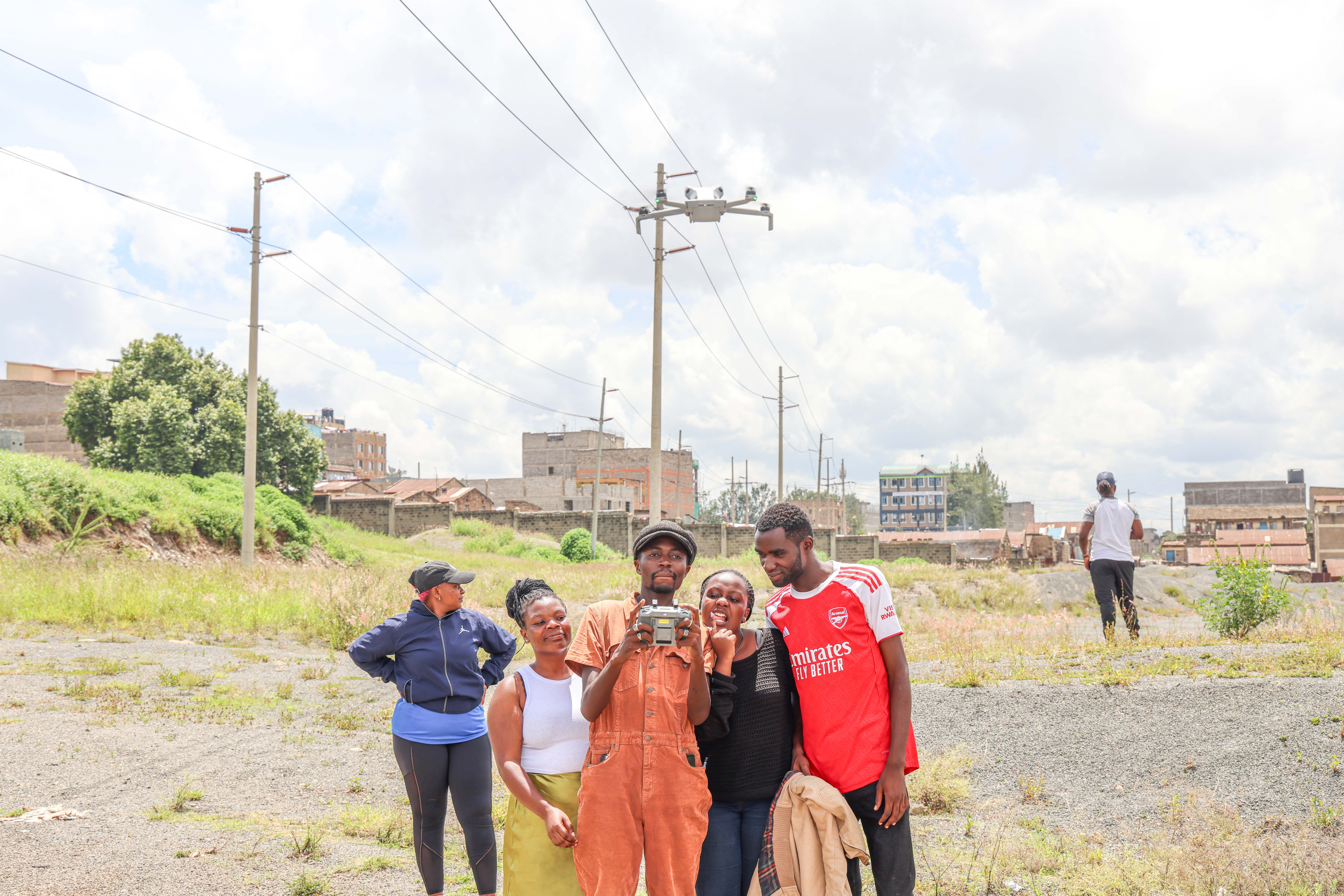
The journey has been about discovering what young people can do when we are trusted to generate knowledge, interpret it, and use it to influence what happens in our communities.
For Anne Wairimu, a Muungano wa Wanavijiji youth federation member from Mathare, the journey has been about building both technical skills and confidence.
“The drone training completely changed how I look at community spaces. I discovered how we can use drones to gather aerial data for community mapping and planning, combining that technology with essential tools like GIS, JOSM, and QGIS.” Ann Wairimu
For Anne, the experience went beyond learning how to operate technology. It showed her how technical tools can become more meaningful when combined with the knowledge of the people who live in the places being mapped.
“The media and storytelling training opened up an entirely new world of learning for me. I have developed skills in photography, videography, interviewing, and blog writing. I have also gained the confidence to document the real experiences of people in my community, and share their stories with the true dignity they deserve.” Ann Wairimu
The training helped her understand that storytelling is not simply about sharing information but also helping communities make their experiences visible, challenge assumptions, and create space for people to speak for themselves.
This became particularly important in understanding how young people can use media to tell stories and to advocate for issues affecting their communities.
Seeing the bigger picture through community-led data
Through citywide profiling, Anne also had an opportunity to interact with residents from different informal settlements and understand the similarities and differences in their experiences.
The experience reinforced the importance of community-generated data in helping communities understand their realities and advocate for better services.
Water, sanitation, education, and infrastructure may seem like basic needs, but for many communities they remain significant challenges. Seeing these realities across different settlements helped demonstrate the value of collecting evidence from the people who experience these challenges every day. It also reinforced an important lesson: Young people can be producers of knowledge that helps communities understand their priorities and advocate for change.
From data to opportunities
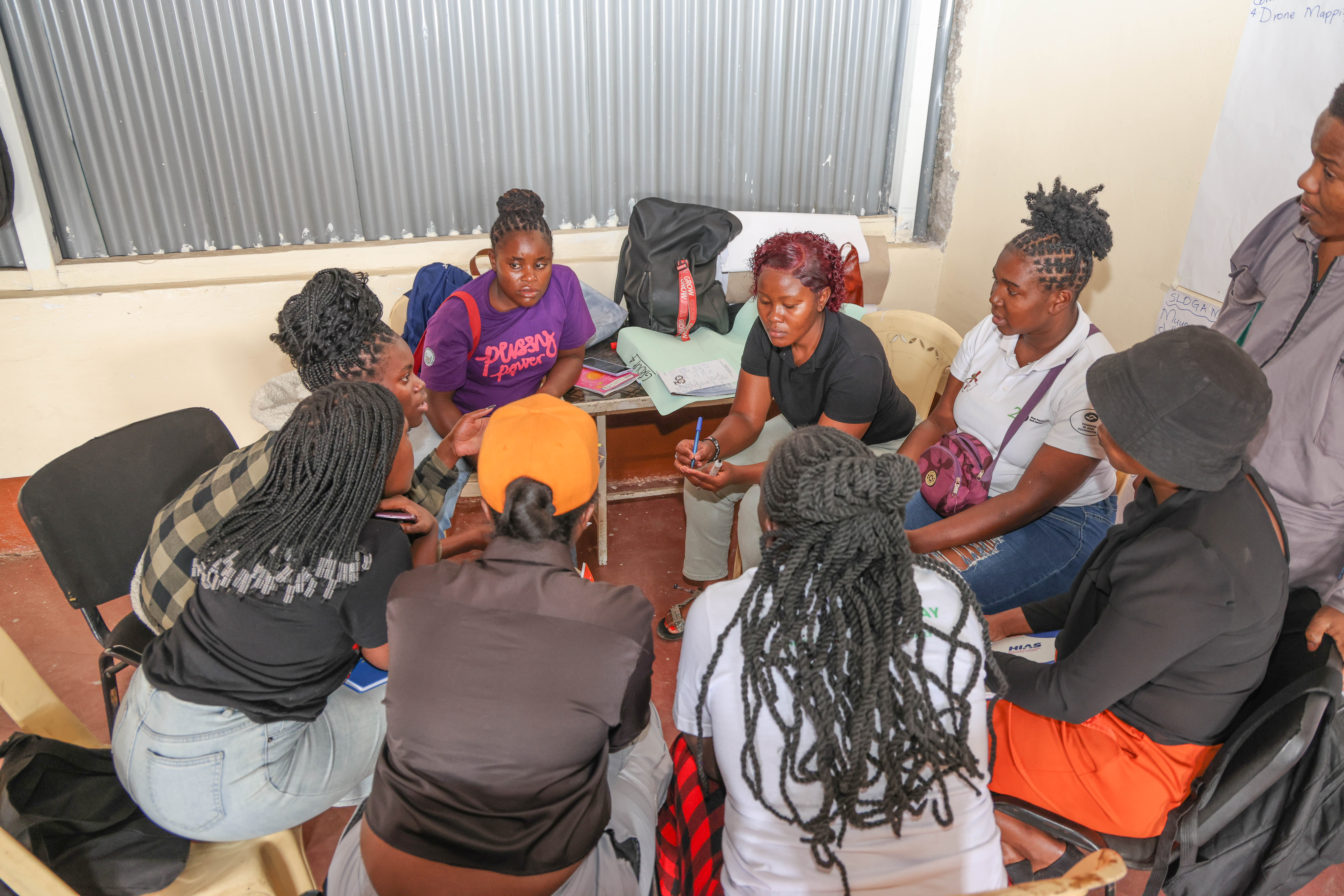
Once the Youth Livlihood data was collected and analyzed, the next critical step was a value chain analysis training session. This framework bridged the gap between raw data and real-world economic opportunities, showing youth how to trace products and services from initial production all the way to the end consumer.
For Anne Wambui, a member of Muungano wa Wanavijiji from Kibera and the Visionaries Youth Group, the value chain analysis session provided an opportunity to think differently about livelihoods and innovation.
“Through the exchange, we explored how value chain analysis can help identify opportunities within local economies, from production and services to markets and consumers.” Anne Wambui
One of her key reflections was that value chain analysis does not have to be something abstract or disconnected from communities, because when combined with community-led data, it can help identify market gaps, available resources, challenges, and potential opportunities for young people.
Ultimately, community profiling, mapping, surveys, and storytelling can all generate the vital information that helps young people understand exactly where opportunities exist and where solutions may be needed.
More than collecting data
One of the biggest lessons from the initiative has been that collecting data is only the beginning.
Young people can go further: they can analyse the information they collect, interpret what it means, tell stories from it, identify opportunities and use the evidence to engage others in finding solutions.
“The biggest lesson from these experiences is that young people can do more than simply participate in development processes. When given the skills, space and opportunity, we can generate knowledge, interpret what it means, tell our own stories and use evidence to identify opportunities and shape solutions.” Kamila Gojobe
For us, the journey is only beginning. The knowledge and skills we are gaining are opening new possibilities to understand our communities and informing how we can contribute to improving them. Through data, technology, storytelling, and innovation, we are beginning to see ourselves as people who can help understand them and be part of creating the solutions.
The question now is not simply what we have learned, but what we can do with what we know.


What happens when young people map their own communities? In Mathare, it means more than better data, it means new skills, new confidence, and new pathways into work. This story traces how community-led data is evolving into a tool not just for advocacy, but for livelihoods.

In this piece, Jacob Omondi, Jackline Waithaka, and Jane Wairutu discuss the profound impact of COVID-19 on youth in informal settlements like Mathare, Nairobi. The pandemic has exacerbated job losses and financial instability, particularly affecting those in the informal economic sector, where many young people rely on daily earnings from their businesses.

In Loitoktok, Kajiado County, a women’s group is transforming lives through resilience and innovation. With support from the Next Level Grant Facility under Voices for Just Climate Action, they’ve expanded urban farming and beekeeping, proving the power of collective action in climate adaptation and economic empowerment.
Join our newsletter to stay up to date on news and projects.
By subscribing you agree to our privacy policy and provide consent to receive updates from our organization.
.svg)


