
There are moments in history that belong not to governments, presidents or institutions, but to ordinary people who refused to surrender. The story of Muungano wa Wanavijiji is one such story. It is a story written not in boardrooms or parliamentary chambers, but in dusty footpaths, crowded informal settlements, church halls, market sheds and the narrow alleys where millions of Kenya's urban poor have struggled to survive.
I was privileged to witness part of this history.
I stood among fellow comrades during Muungano @20, when we celebrated the heroes and heroines who had transformed despair into hope. We remembered those who carried the struggle from Kisumu to Mombasa, through Nairobi's informal settlements and onward to Timau, Nakuru, Kitale and many other communities where the poor organized themselves to demand dignity.
Today, as we commemorate Muungano @30, the celebration carries a different meaning. It is no longer simply a reunion of old friends. It is the passing of a torch to a new generation. History cannot be erased simply because new leaders emerge. Every generation inherits the responsibility to protect the gains of those who came before it while imagining a better future.
Thirty years represent more than a milestone. They represent thousands of meetings, millions of savings, countless community enumerations, painful evictions, sleepless nights, difficult victories, and unwavering belief that even the poorest communities possess the power to transform their own destiny.
When I joined Muungano in the year 2000, I was only eighteen years old.
Kenya itself was undergoing profound change. Political reforms were reshaping the country, while economic liberalization widened inequalities. Human rights debates largely focused on constitutional reform and political freedoms, yet for millions living in informal settlements, the daily struggle centered on food, shelter, water, sanitation and security of tenure.
The conversation was simple but profound: Was democracy meaningful if people remained homeless? Could freedom truly exist where entire communities lived under constant threat of eviction?
These questions became the foundation of my lifelong commitment.
By then, Muungano was barely four years old, but it had already become a movement unlike any other. Rather than speaking for the poor, it organized the poor to speak for themselves.
That distinction changed everything.
One painful reality became impossible to ignore.
Every affluent neighborhood seemed to have an informal settlement beside it.
Kibera stood next to wealthy suburbs.
Korogocho served industrial zones.
Obunga lay beside Tom Mboya Estate.
Nyalenda bordered Kisumu's expanding urban centre.
The pattern repeated itself across Kenya.
The people who cleaned homes, built roads, guarded gates, washed clothes, sold vegetables and sustained the urban economy returned every evening to settlements lacking clean water, decent sanitation, secure housing and legal recognition.
The city depended upon them while pretending they did not exist.
This contradiction became one of Muungano's greatest lessons.
The informal settlement was never outside the city.
It was the city.
Life in Kenya's informal settlements demanded extraordinary resilience.
Families worked long hours for meagre wages. Women endured exploitation and humiliation. Young people navigated unemployment, crime and hopelessness. Every day presented another struggle to preserve dignity.
Yet perhaps the greatest burden was uncertainty.
Entire settlements sometimes caught fire in mysterious circumstances.
Bulldozers appeared without notice.
Homes disappeared overnight.
Communities awoke to find years of hard work reduced to twisted sheets of corrugated iron.
Evictions were often carried out without meaningful consultation or compensation. Families carried whatever possessions they could salvage before beginning again.
Still they rebuilt.
That resilience became the defining characteristic of the movement.
When homes were demolished, communities organised.
When savings were lost, they started saving again.
When fear threatened to silence them, they sang.
Hope became an act of resistance.
Kisumu carried its own burden of exclusion.
Although national conversations about informal settlements often focused on Nairobi, the realities facing communities in Nyalenda, Obunga, Manyatta and Bandani reflected the same structural inequalities.
Yet Kisumu also possessed extraordinary energy.
As young people, we believed our communities deserved better.
In the year 2000, together with fellow youth leaders, we established the Organisation Based on Community Health (OBOCH) to confront the devastating effects of HIV/AIDS among young people. We understood that public health, education and economic empowerment were inseparable.
The initiative demonstrated something important.
Communities already possessed solutions.
They simply required organisation.
Once health programmes began succeeding, another question emerged.
How could young people survive economically without turning to crime?
The answer arrived through Muungano.
Collective savings became the first step towards collective power.
What began as small daily contributions evolved into organised community finance, leadership development and ultimately community-driven development across Kisumu's informal settlements.
To outsiders, Muungano appeared to be a savings movement.
Those inside understood something deeper.
Savings built confidence.
Confidence built organisation.
Organisation built leadership.
Leadership built movements.
Our daily savings represented more than money.
Each coin declared that poor people could invest in their own future.
Enumeration exercises became equally revolutionary. For generations, governments had counted everything except the poor. Muungano reversed that tradition.
Communities counted themselves.
They mapped their settlements.
They documented every household.
They recorded every toilet, every water point, every pathway and every challenge.
For the first time, invisible communities produced evidence powerful enough to influence public policy.
The poor were no longer statistics created by outsiders.
They became authors of their own knowledge.
Life in the settlements was never sustained by politics alone.
It survived because of culture.
After difficult meetings, communities sang.
After demolitions, they danced.
After painful losses, they prayed.
Faith and music became emotional infrastructure when physical infrastructure was absent.
Father Alex from Korogocho Parish offered spiritual guidance that reminded communities they remained worthy of dignity despite society's rejection.
Kimani Joseph's drumming and Mama Susan's singing transformed evenings of despair into celebrations of survival.
Those songs carried people through nights when bulldozers might arrive before dawn.
Sometimes hope sounded like music.
History often remembers institutions while forgetting individuals.
Yet Muungano was built by remarkable women and men whose courage shaped an entire generation.
Mzee James Wagathiru transformed community savings into a philosophy of empowerment that inspired thousands of organised savers across Kenya.
Joseph Kalulu helped pioneer community-led data collection that influenced settlement upgrading initiatives throughout Africa, demonstrating that residents themselves could become respected researchers and planners.
The late Benson Erick Osumba understood that community development required security. In neighborhoods where crime threatened collective action, he became a strategist whose leadership protected organizing efforts.
Wilberforce, affectionately known as OCS, possessed extraordinary knowledge of local security dynamics. His advice often prevented conflicts before they escalated.
Ezekiel Rhema provided courageous leadership during difficult years, proving that effective leaders need not possess wealth or privilege to inspire confidence.
Maundu, popularly known as Mawetete, reminded communities that laughter itself could become a form of resistance. His humor eased tensions during some of the movement's most difficult moments.
Anastasia Wairimu combined quiet humility with exceptional analytical ability. She continually redirected discussions toward the lived realities of women and families whose needs remained central to every decision.
Doris Moseti represented another important lesson.
Initially viewed with suspicion because of her administrative background, she demonstrated that genuine dialogue could transform assumptions. She became an important bridge between communities and government structures, proving that trust can be built through integrity and consistent engagement.
Joseph Muturi emerged as one of the movement's most thoughtful strategists. His leadership would eventually extend beyond Kenya to the global stage, reflecting the international significance of community-led organizing.
Fatuma Chibole became a fearless advocate for women and residents of informal settlements in Kisumu, helping to advance initiatives in water, sanitation, and community development while ensuring women's voices were impossible to ignore.
Lawrence Apiyo refused complacency. Wherever injustice appeared, he responded with action. His insistence that "we will not rest" captured the restless spirit that sustained the movement through decades of struggle. His challenge to us in Kisumu—to address livelihoods alongside health—helped inspire savings initiatives that spread across informal settlements throughout the city.
Jane Weru stood courageously in courtrooms where few dared to challenge forced evictions. Although legal victories were not always immediate, her persistence laid foundations for stronger housing rights advocacy through institutions such as Pamoja Trust and Akiba Mashinani Trust. In many respects, she lost battles in court but helped communities win the larger struggle for justice.
Each leader contributed unique gifts.
Together they built something greater than themselves.
Three decades later, Kenya has changed.
Affordable housing has entered national policy conversations.
Community savings are recognized as legitimate development tools.
Participatory planning has become widely accepted.
Settlement profiling and community enumeration influence government and international development programs.
Many ideas once dismissed as unrealistic are now mainstream.
Yet the work remains unfinished.
Millions continue to live in informal settlements without secure tenure, adequate sanitation or affordable housing.
Climate change introduces new vulnerabilities.
Rapid urbanization creates new inequalities.
Young leaders inherit different challenges, but the fundamental struggle remains the same: ensuring that every Kenyan enjoys the right to live with dignity.
Muungano @30 is therefore not an ending.
It is a renewal.
The pioneers carried the movement through years of uncertainty.
Today's generation must carry it through new realities.
Our greatest responsibility is not simply to remember history.
It is to continue making it.
The songs may change.
The slogans may evolve.
The strategies will certainly adapt.
But the principle that gave birth to Muungano remains unchanged:
People organised around hope can transform their own communities.
As we celebrate thirty years, let us honor those who walked before us by ensuring that thirty years from now another generation will gather not merely to remember our struggles, but to celebrate the justice we continued to build.
History cannot be erased.
It can only be carried forward.
And the journey continues.


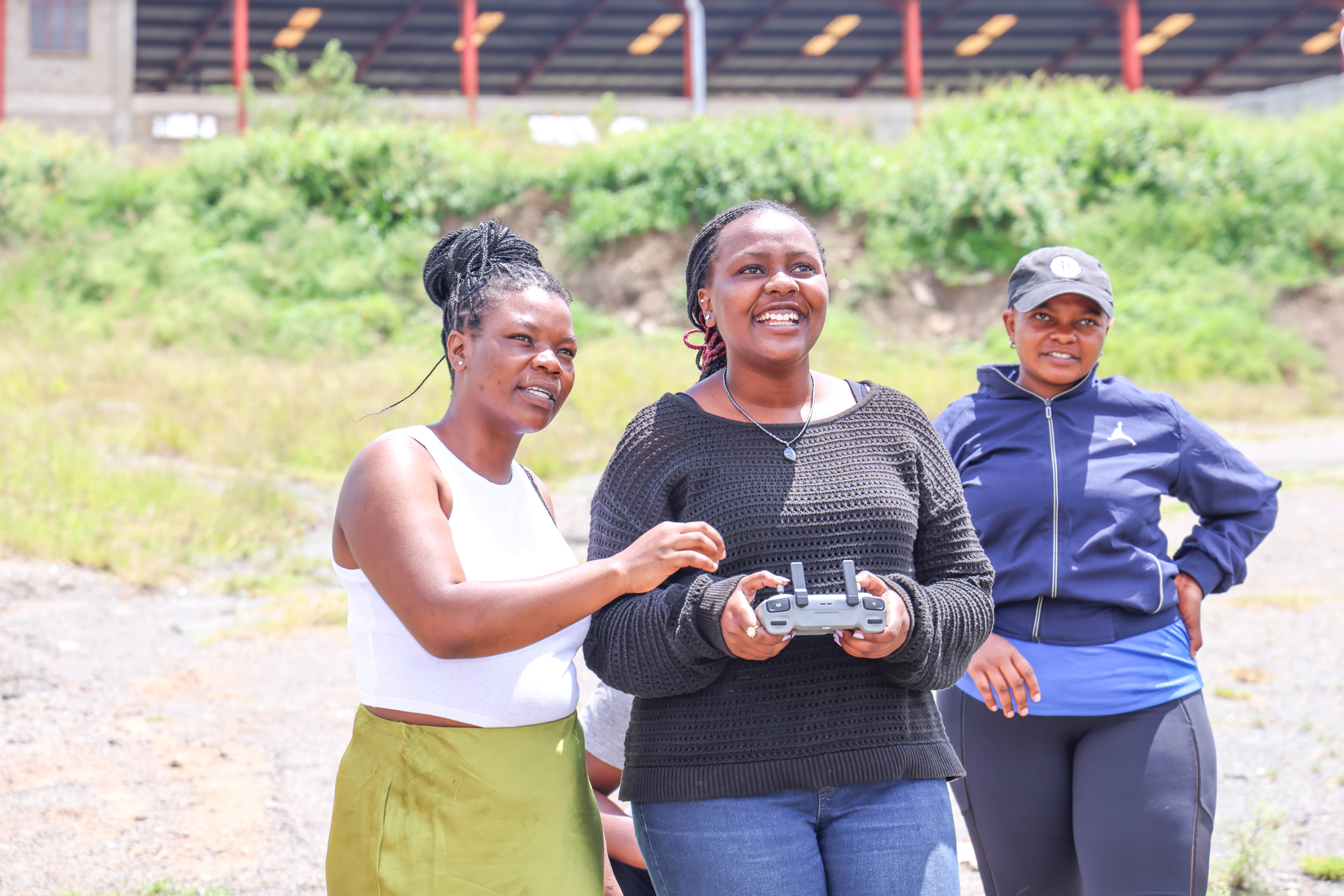
What happens when young people map their own communities? In Mathare, it means more than better data, it means new skills, new confidence, and new pathways into work. This story traces how community-led data is evolving into a tool not just for advocacy, but for livelihoods.

In this piece, Jacob Omondi, Jackline Waithaka, and Jane Wairutu discuss the profound impact of COVID-19 on youth in informal settlements like Mathare, Nairobi. The pandemic has exacerbated job losses and financial instability, particularly affecting those in the informal economic sector, where many young people rely on daily earnings from their businesses.

In Loitoktok, Kajiado County, a women’s group is transforming lives through resilience and innovation. With support from the Next Level Grant Facility under Voices for Just Climate Action, they’ve expanded urban farming and beekeeping, proving the power of collective action in climate adaptation and economic empowerment.
Join our newsletter to stay up to date on news and projects.
By subscribing you agree to our privacy policy and provide consent to receive updates from our organization.
.svg)


