

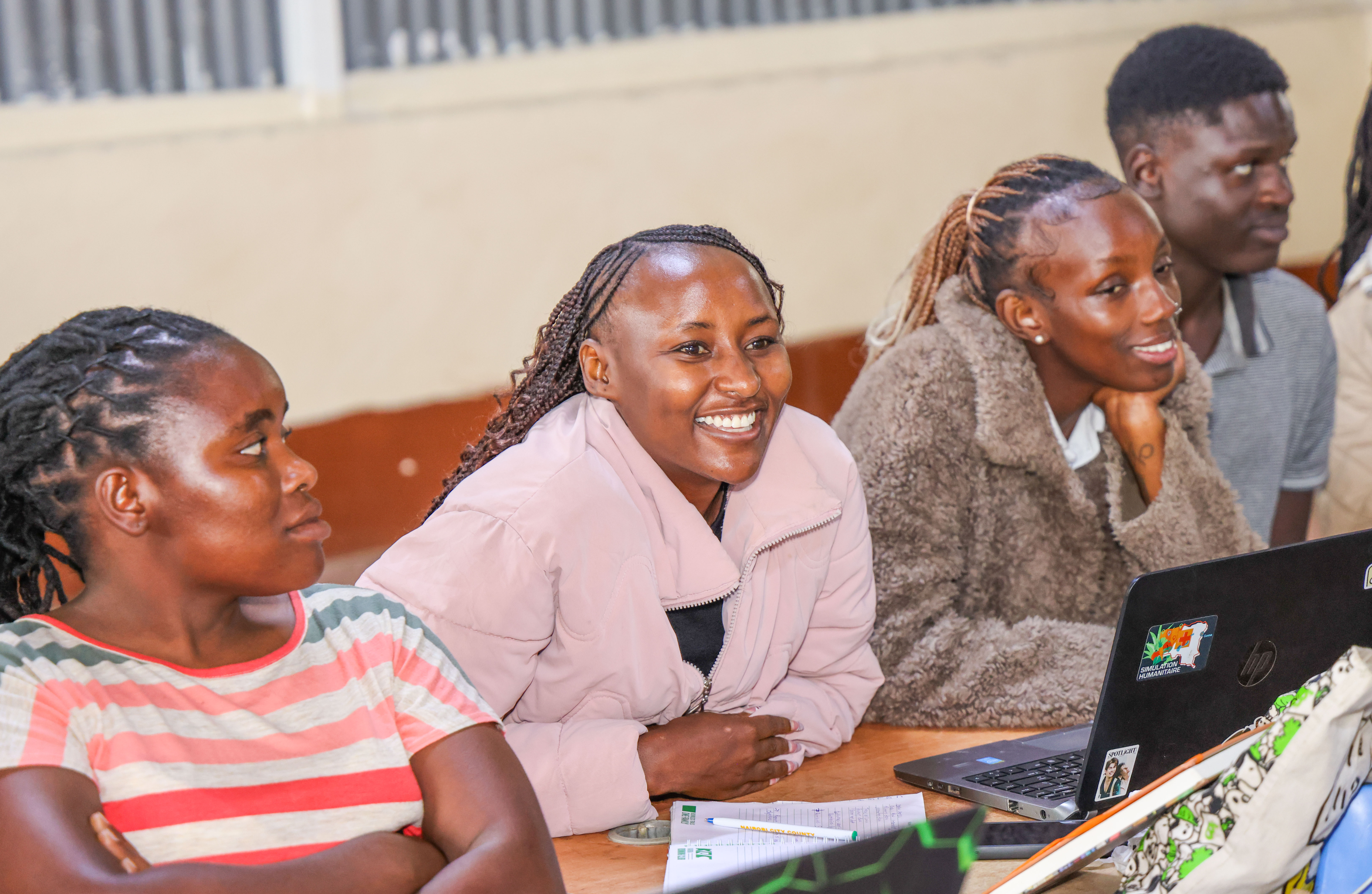
Data tells stories, but only if we know how to interpret it. That is one of the biggest takeaways from the data analysis training I recently attended in Mathare, under the Dr. Sulley Gariba SDI Impact Innovation Initiative. The training brought together about 30 participants, all eager to learn how to analyse data we had collected on youth livelihoods in the community.
What seemed like a technical topic at first quickly became a practical and inspiring experience that changed how I think about community led research. One of the highlights of the training was learning from experienced facilitators, including Camila Carrasco, a student at the University of Manchester’s Global Development Institute, alongside Sarah Ouma and Jane Njoroge from SDI Kenya, who also facilitated the sessions. Their diverse perspectives and guidance helped us understand how community-generated data can contribute to research and local decision-making.
Learning from Camila, with her experience in global development brought a valuable perspective to the sessions, showing us how community-generated data can contribute to research, and local decision making. It was encouraging to see how the work being done in Mathare connects to broader conversations about inclusive development.

The training was not just about numbers, spreadsheets, or charts but about understanding the realities behind the data and learning how evidence can help communities like mine to advocate for meaningful change. From the moment we gathered, there was a strong sense of collaboration.
We had group discussions to strengthen our ability to make sense of the youth livelihood data collected from the young people in Mathare. Since youth livelihoods are a major focus of ongoing community initiatives, learning how to analyze this data felt especially relevant. One thing I appreciated was that the facilitators made the sessions very interactive, from group discussions to presentations. Instead of simply presenting theories, we were guided through practical exercises using real examples from data collected in Mathare.
This made the learning process much easier because we could immediately connect what we were learning with our own experiences in the community. A key part of the training focused on organizing data before analysis. I learned that collecting good data is only the first step. Before drawing conclusions, it is important to clean the data, identify missing information, and ensure that responses are consistent.

We also explored different ways of identifying patterns within the data. Looking at responses from young people allowed us to begin asking important questions. What livelihood opportunities are most common? What challenges do young women face compared to young men? How do issues like access to capital, skills training, or safety influence economic opportunities in Mathare? Rather than jumping to assumptions, we learned to let the data guide our understanding. One of my favorite moments during the training was learning how to present findings in a simple and understandable way. We discussed how pivot tables, graphs, and pie charts can make complex information easier for community members, organizations, and decision-makers to understand.
I realized that good data analysis is not just about producing reports but about communicating insights clearly so they can lead to action. The discussions among participants were equally valuable. As we worked together in small groups, we exchanged ideas about the realities young people face in Mathare. Some conversations highlighted barriers in the different themes such as limited employment opportunities, financial constraints, business licensing, digital skills and technology, education, climate change and how these affects the livelihood of the youths in Mathare.
These conversations reminded me that every number in a dataset represents a real person's experience. This training strengthened my capacity in data collection, analysis and presentation. Quite frankly before attending the training, data analysis felt intimidating, something only done by experts, but now I am confident it’s something I can do. More importantly, I now see data as a powerful tool for community advocacy. When communities like ours can present evidence about youth livelihoods, we are better positioned to engage organizations, the government, and other stakeholders with credible information that supports our priorities.
This training encouraged me to apply these skills in future research and community projects. Sharing the skills learned within our groups and the knowledge gained will help contribute more effectively to understanding youth livelihoods in Mathare and ensuring that community voices are reflected in the evidence used to inform decisions. This experience reminded me that behind every dataset are dreams, struggles, and opportunities waiting to be understood. Learning how to analyze data is not simply about working with numbers but, about transforming information into knowledge and knowledge into action.


What happens when young people map their own communities? In Mathare, it means more than better data, it means new skills, new confidence, and new pathways into work. This story traces how community-led data is evolving into a tool not just for advocacy, but for livelihoods.

In this piece, Jacob Omondi, Jackline Waithaka, and Jane Wairutu discuss the profound impact of COVID-19 on youth in informal settlements like Mathare, Nairobi. The pandemic has exacerbated job losses and financial instability, particularly affecting those in the informal economic sector, where many young people rely on daily earnings from their businesses.

In Loitoktok, Kajiado County, a women’s group is transforming lives through resilience and innovation. With support from the Next Level Grant Facility under Voices for Just Climate Action, they’ve expanded urban farming and beekeeping, proving the power of collective action in climate adaptation and economic empowerment.
Join our newsletter to stay up to date on news and projects.
By subscribing you agree to our privacy policy and provide consent to receive updates from our organization.


