
Background
Tudor Moroto, locally known as Moroto, is one of the 87 informal settlements within Mombasa City. It is located in Tudor Ward, Mvita Sub-County, approximately 200 meters from the Indian Ocean shoreline. The settlement spans about 22 acres and is home to over 8,300 people residing in approximately 3,800 households.
Established in the mid-1980s, Tudor Moroto began with a small population living in simple box houses. These structures later evolved into makuti-thatched houses, and over time, most residents transitioned to using iron sheets due to affordability and availability. As housing demand grew, Tudor gradually transformed from a planned estate into a dense informal settlement.
Currently, around 65% of the houses are constructed using temporary materials, while 35% are made from permanent materials (SDI-K, 2023). Ownership patterns indicate that 97% of structures are owned by their owners, with only 3% rented. Rent in the settlement ranges from KES 1,000 to KES 8,000 per month, depending on the size and condition of the units
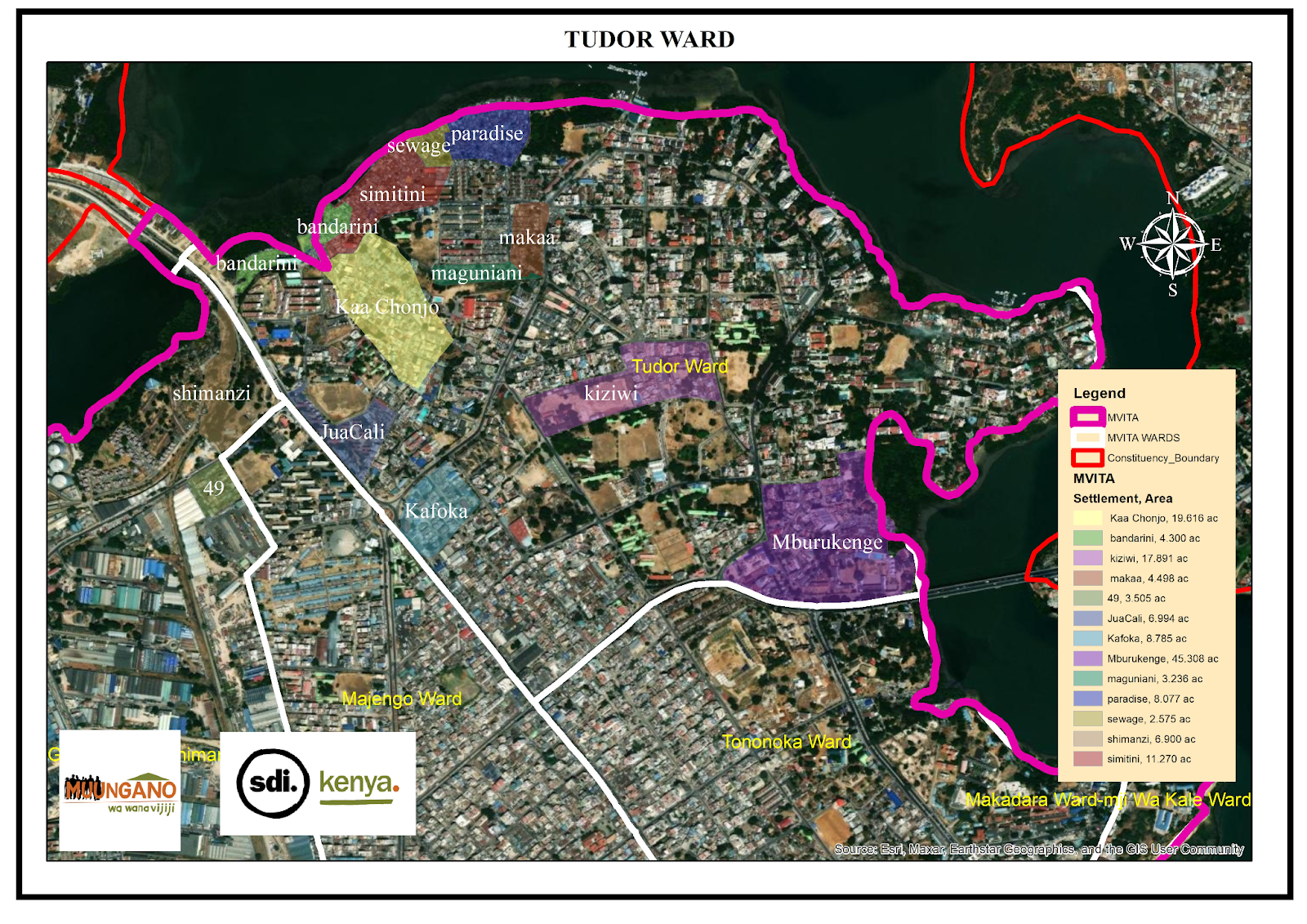
Moroto settlement
Key Challenges &Opportunities
One of the key challenges facing Tudor Moroto is the security of land tenure. Most residents do not own the land they occupy, making them highly vulnerable to forced evictions. These threats have prompted residents to take legal action in response to at least three eviction attempts, often seeking support from civil society organizations such as Muungano wa Wanavijiji, Haki Yetu, and Amnesty International. Land insecurity worsens residents' social and economic vulnerability, particularly for low-income households.
In terms of healthcare service provisions, while Tudor Moroto hosts six small clinics and dispensaries, the absence of a referral hospital forces families to travel long distances and incur high charges for essential health services. On average, residents spend between KES 1,000 and 1,500 per medical visit, which is unaffordable for many who rely on informal businesses and casual laborers.
Access to portable, reliable water and energy is another critical concern. Most households in the settlement depend on boreholes and wells for their drinking water. Saline water in the region is cheaper than the fresh water, which is, in some instances, supplied by lorries. Saline water costs Ksh. 5 per 20L jerican, while fresh water costs Ksh. 30, which poses a major challenge to Moroto residents. Inaccessibility to clean water and also unreliability lead to health-related issues in the settlement. Electricity access is often irregular, unsafe, and informally connected, adding to the burden of high energy costs and fire hazards.
Climate-related shocks, particularly flooding and rising temperatures, continue to affect the settlement. Despite facing repeated disasters, Tudor Moroto has received minimal external support, mostly limited to emergency relief efforts by organizations like the Kenya Red Cross, Haki Yetu, and Muungano Wa Wanavijiji during flood events.
To address these persistent challenges, the community, in partnership with SDI Kenya and Muungano wa Wanavijiji, has identified three priority areas:
There is also an urgent opportunity to strengthen the role of Community Health Promoters (CHPs) by equipping them with adequate supplies, incentives, and continuous training. This would reduce the pressure on overstretched clinics and improve frontline health support.
The community is eager to establish resilience hubs that will also serve as early-warning stations to enhance disaster preparedness and response. Moreover, local community climate action groups and youth and women’s groups have played a critical role in offering emergency support. However, their efforts are constrained by limited physical space, scarce resources, and inadequate training capacity. Most operate on a volunteer basis with minimal support.
To overcome these barriers, residents are advocating for the establishment of a Community Resilience Hub. This will serve as a space where groups can organize, access capacity-building resources, exchange knowledge, and deliver services to the broader community.
Additionally, the Mombasa County Government has expressed its willingness to work with local communities and SDI Kenya. This presents a valuable opportunity to strengthen policy implementations and co-create inclusive urban development frameworks that consider informal residents' strategies
Through collaborative partnerships with civil society, academia, county governments, and other stakeholders, Tudor Moroto’s residents are determined to secure a dignified future and build resilience in the face of increasing risks. With the right support, this community can transform its living conditions and contribute to a more inclusive, sustainable Mombasa for everyone.


What happens when young people map their own communities? In Mathare, it means more than better data, it means new skills, new confidence, and new pathways into work. This story traces how community-led data is evolving into a tool not just for advocacy, but for livelihoods.

In this piece, Jacob Omondi, Jackline Waithaka, and Jane Wairutu discuss the profound impact of COVID-19 on youth in informal settlements like Mathare, Nairobi. The pandemic has exacerbated job losses and financial instability, particularly affecting those in the informal economic sector, where many young people rely on daily earnings from their businesses.

In Loitoktok, Kajiado County, a women’s group is transforming lives through resilience and innovation. With support from the Next Level Grant Facility under Voices for Just Climate Action, they’ve expanded urban farming and beekeeping, proving the power of collective action in climate adaptation and economic empowerment.
Join our newsletter to stay up to date on news and projects.
By subscribing you agree to our privacy policy and provide consent to receive updates from our organization.
.svg)


