
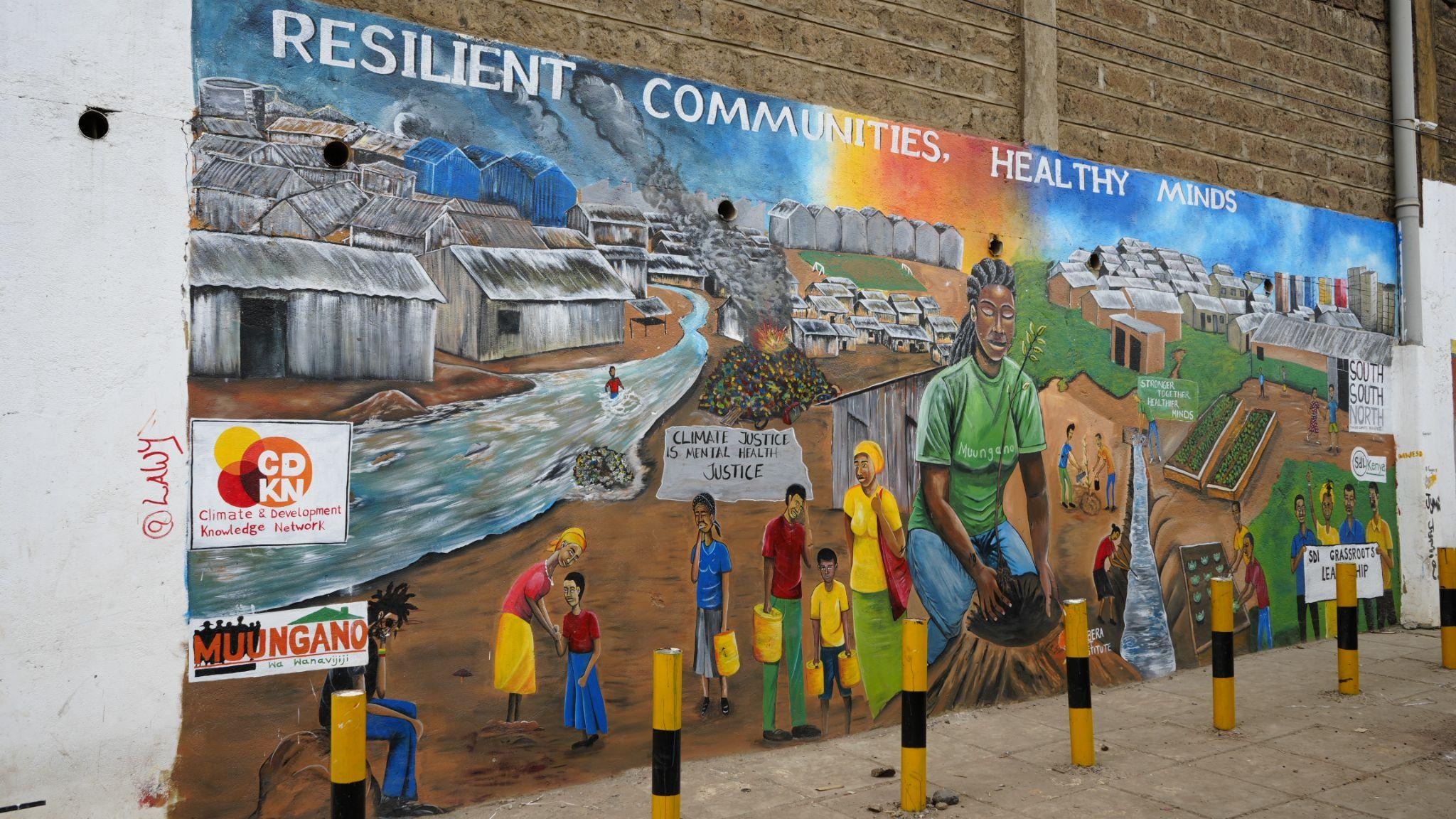
A youth-led wall mural in Mukuru kwa Reuben.
You can't easily walk past this wall without looking. Painted along a busy stretch of Mukuru kwa Reuben, near Ruben Center, it tells a story that many residents already know, but perhaps don't always have the words to describe. Created by young Muungano artists from Mukuru and Kibera, the mural brings climate change out of reports and conversations in meeting rooms and places it where everyone can see it: on a wall, in the middle of the community. Painted on 27 May 2026, the mural is designed to raise awareness about climate change, its effects on mental health, and the locally led solutions communities are already pursuing.
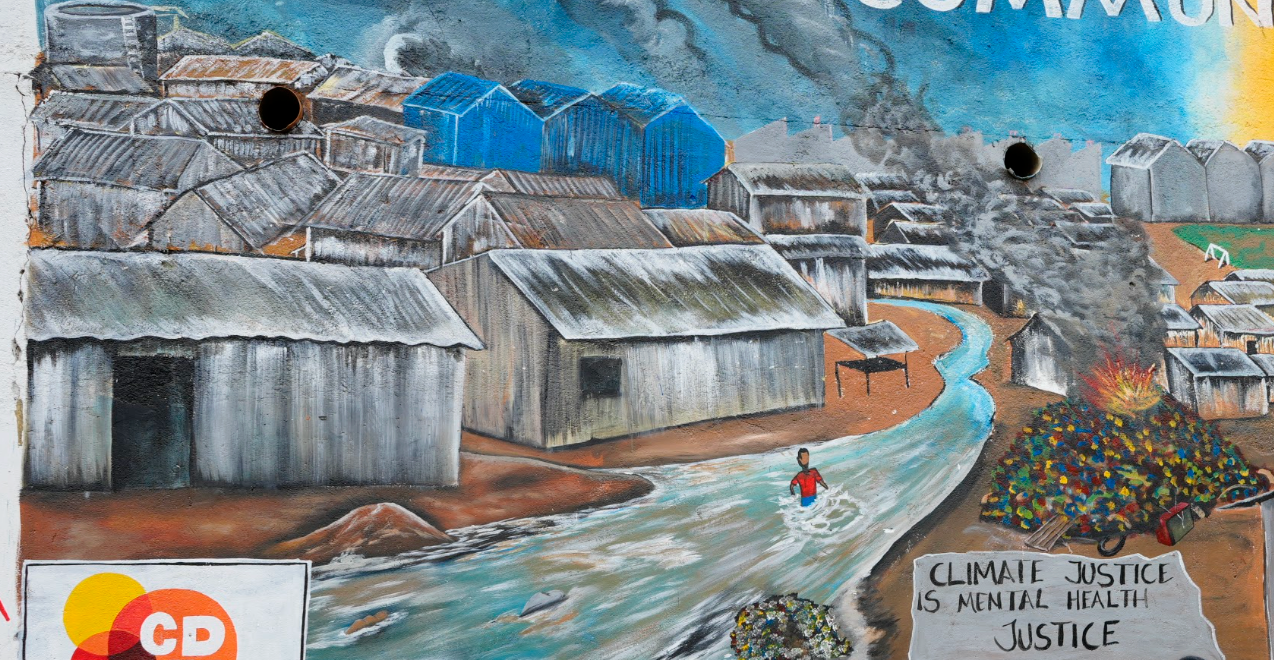
Look closely and the wall begins with a difficult question: what happens when climate shocks meet everyday life in an informal settlement? On one side, flooding cuts through homes and neighbourhoods, alongside images of waste, pollution, environmental degradation and poor living conditions. These are not distant or abstract climate impacts for the young people who created the mural, but realities that communities such as Mukuru and Kibera have experienced firsthand.
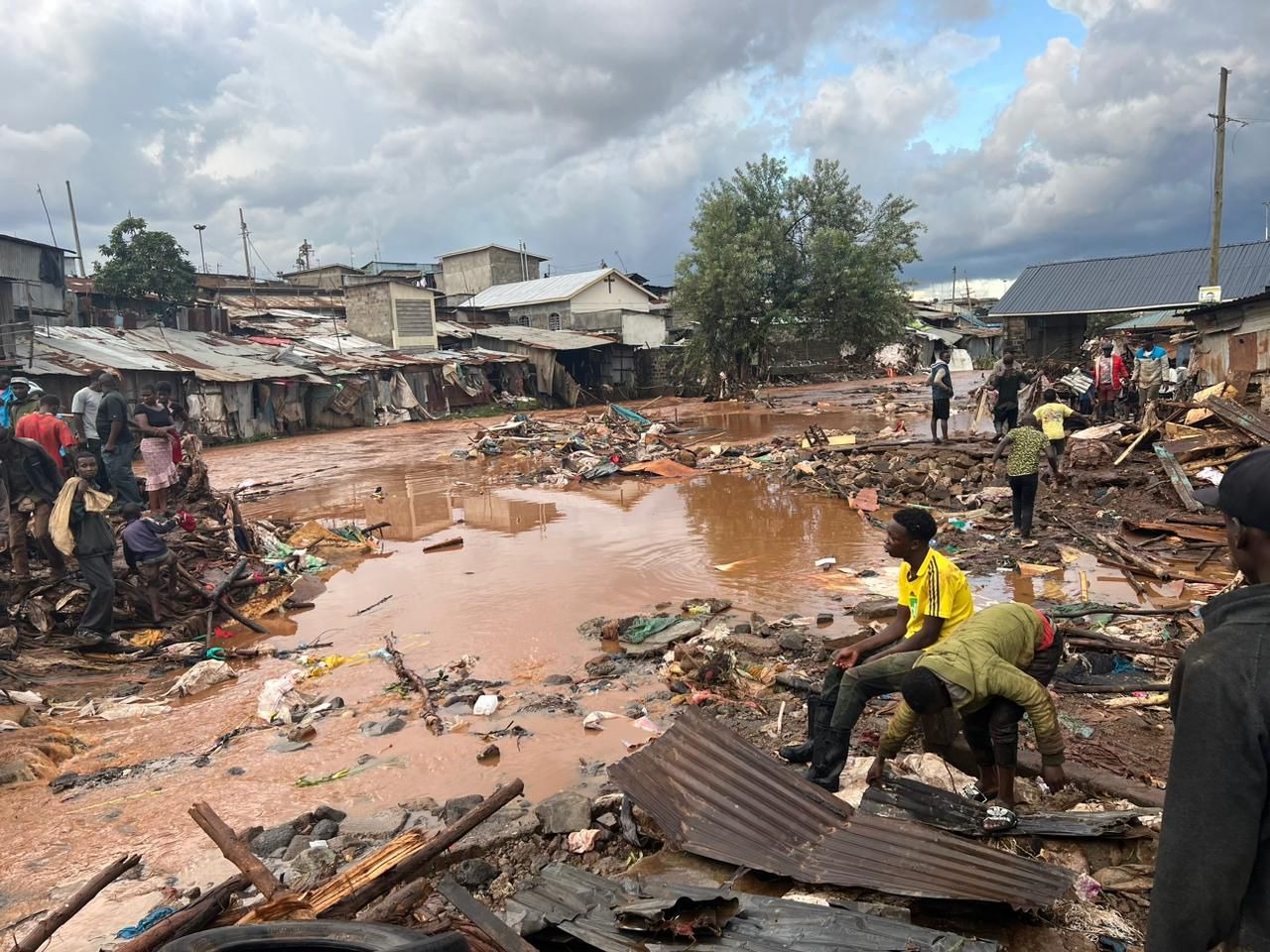
The 2024 floods left homes destroyed, livelihoods disrupted, and communities grappling with the devastating impacts of extreme weather.
Nairobi's devastating floods in 2024 showed just how quickly that reality can become a crisis. The floods claimed lives across the city, with informal settlements among the hardest hit. Young people also stepped forward to rescue stranded residents and distribute essential supplies. Where homes, businesses and basic services are already vulnerable, a flood can destroy belongings, disrupt livelihoods, contaminate the environment and leave families uncertain about what comes next.
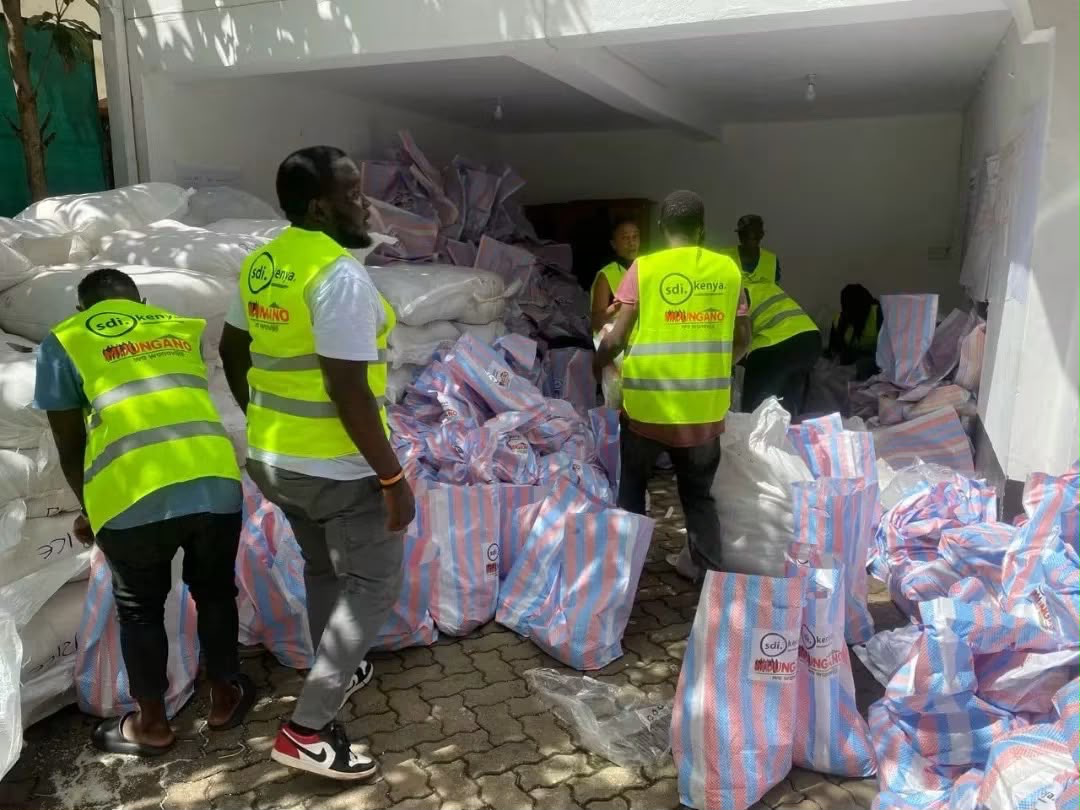
Muungano Youth stepped in to support flood-affected families, helping distribute food and other essential supplies to communities in need.
That uncertainty matters because climate change does not only affect the places where people live. It can also affect how people feel, think and cope. The loss of a home or livelihood, the fear of another flood, the stress of extreme heat, or the trauma of experiencing a disaster can all take a toll on mental well-being. The artists recognised this connection in the mural, placing these emotional realities alongside the physical impacts of climate change.
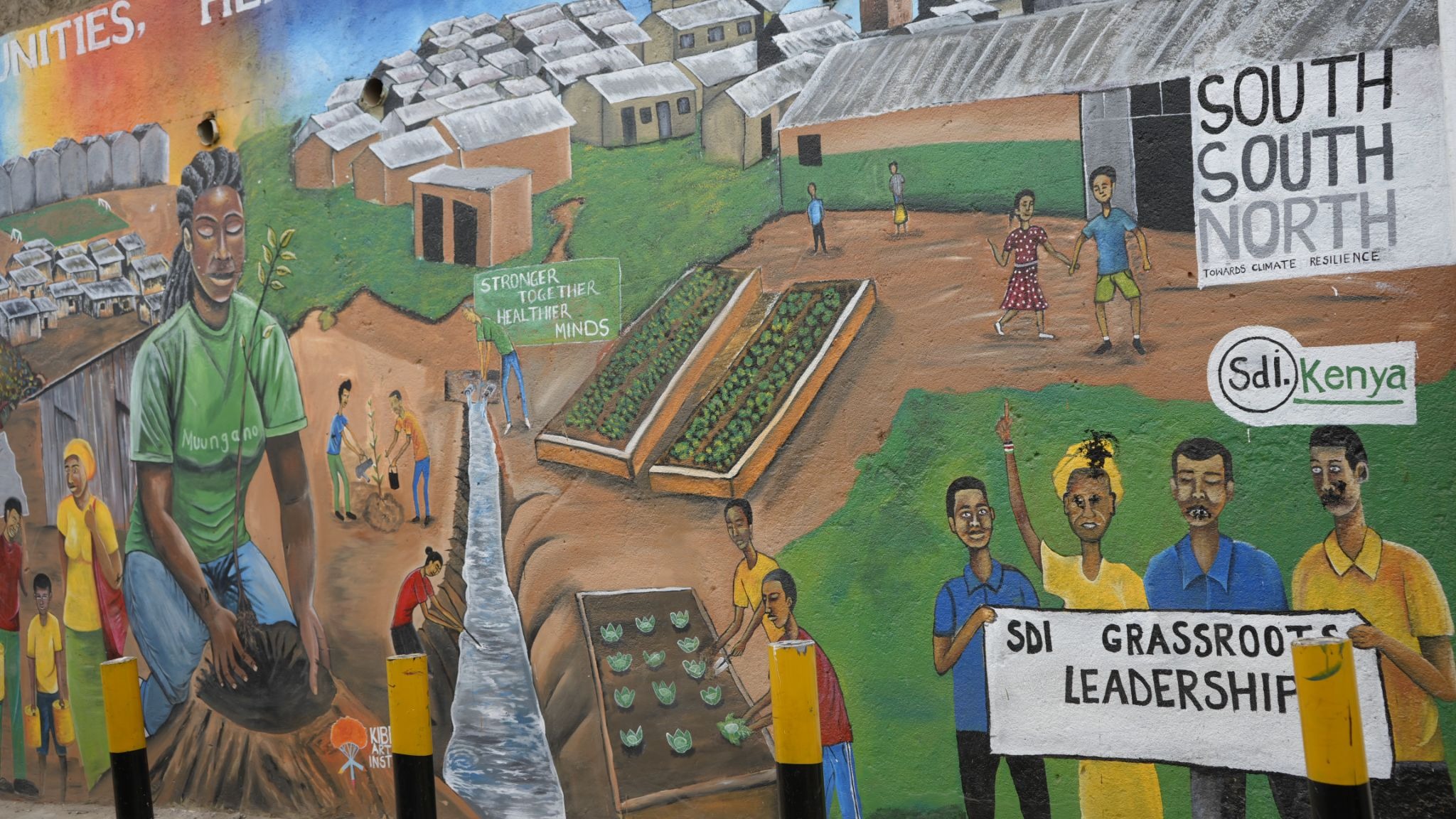
But the artists do not leave the community surrounded by floodwater and uncertainty. The story changes as the eye moves across the wall. The grey and difficult realities give way to green spaces, urban farming, trees, environmental conservation, community organising and grassroots leadership. The message is not that climate change is easy to overcome. Rather, it is that communities are already doing something about the conditions they face.
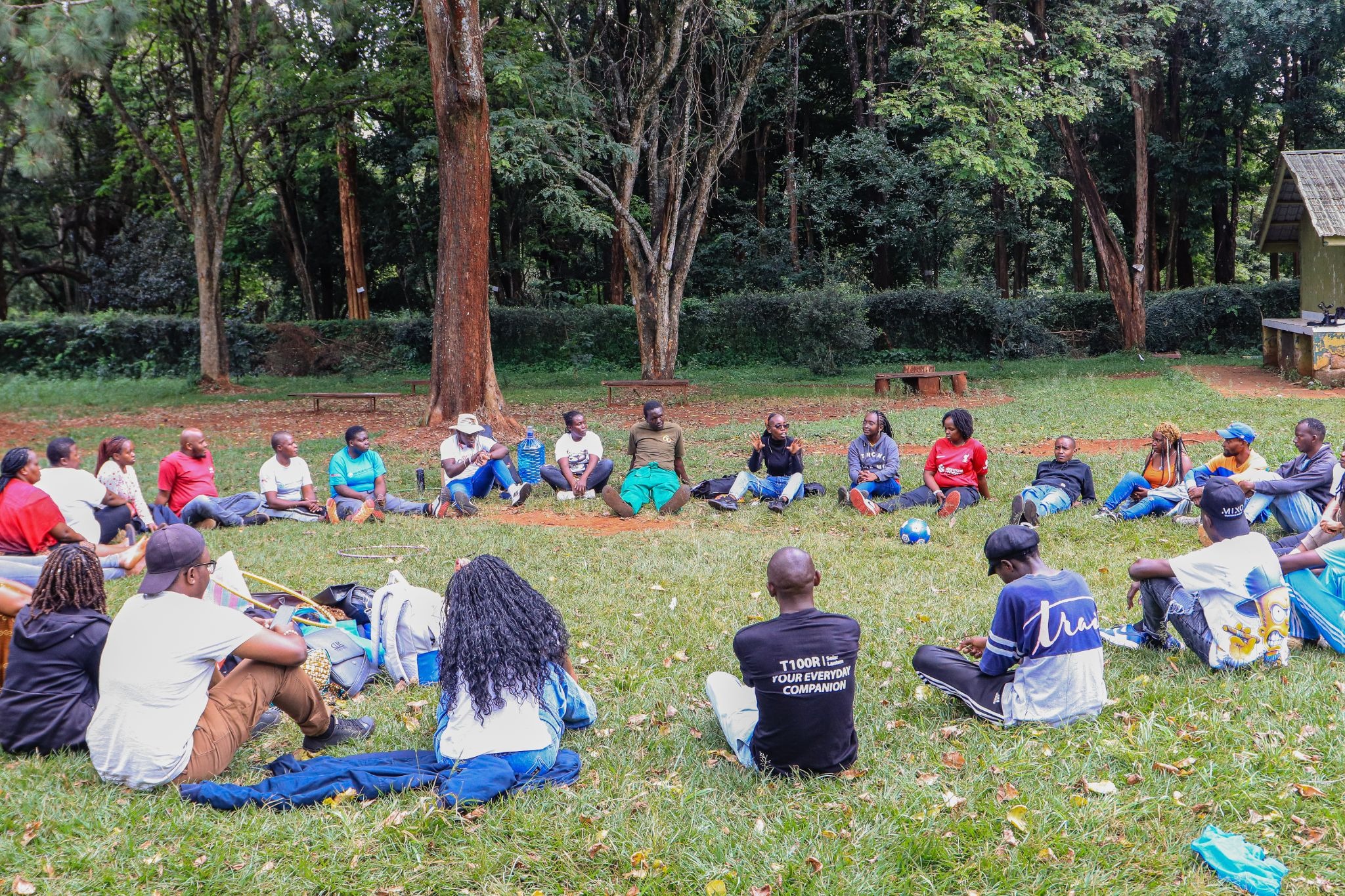
Mental health champions gather for a Tabasamu Café, creating a safe space for conversation, connection and healing.
This is where the connection between climate action and mental health becomes particularly important. Building resilience is not only about protecting homes, improving drainage or preparing for the next flood. It is also about creating neighbourhoods where people have stronger social connections, a sense of agency and hope. This is the kind of resilience young people are already helping to build through initiatives such as Race to Resilience (R2R). Through their work, youth raise awareness of the links between climate change and mental health, promote psychological resilience, and create spaces for residents to participate in shaping community-led solutions.
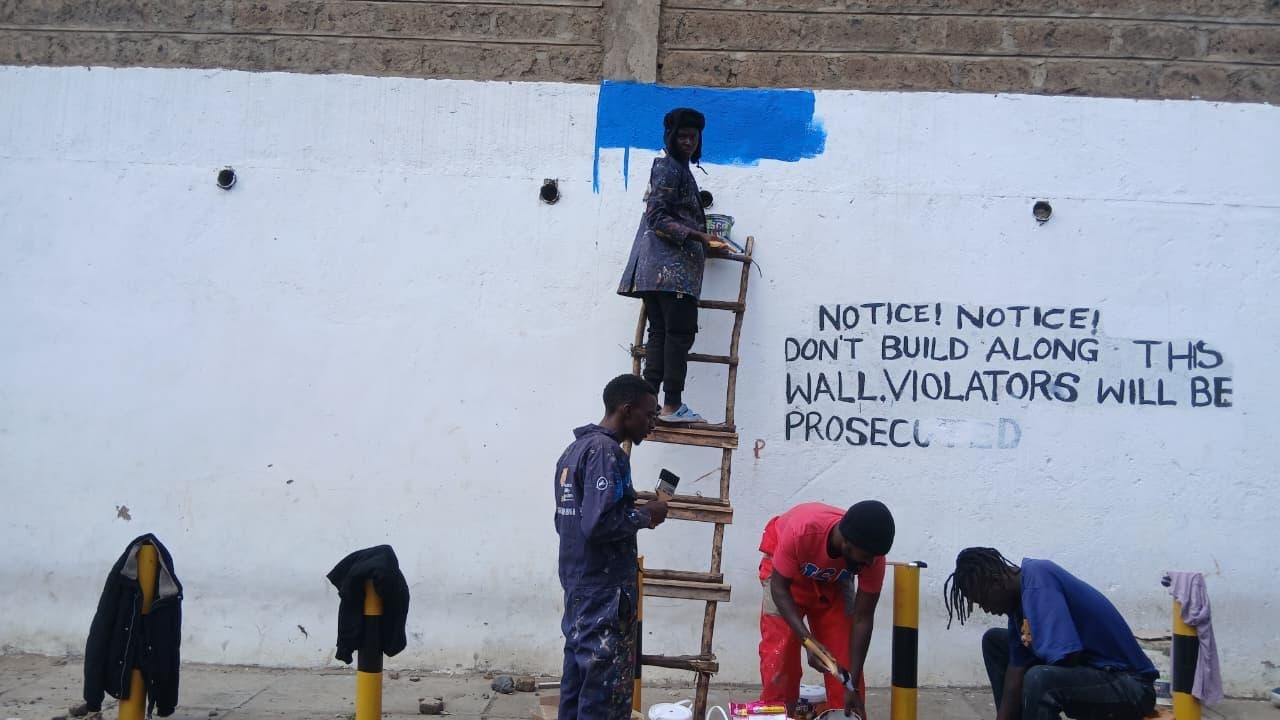
Youth use art and public spaces to turn their lived experiences into messages for their communities.
For Muungano youth, this message comes from lived experience. They understand that when disaster strikes, communities are often among the first to organise, respond and support one another. They also understand that knowledge already exists within communities. Through the mural, they are able to connect flooding with livelihoods, environmental conditions with mental health, and climate risks with community action, turning experiences that are often difficult to explain into something people can see and discuss.
Perhaps the best evidence that the wall is already doing what it was intended to do happened before the paint had even dried. While the young people were working, a resident passing by stopped to ask what they were drawing and why. The artists explained the connection between climate change and mental health, talked about the challenges facing informal settlements, and shared the importance of community-led solutions. In that moment, the mural stopped being simply a painting and became a conversation.
And perhaps that is the power of putting knowledge on a wall. A workshop has a beginning and an end. A report can sit on a shelf. A presentation finishes when the last slide disappears. But a wall remains. People will continue to walk past it on their way to work, school, the market or home. They can stop, look at the flooded homes, notice the gardens and trees, see the young people organising, and ask what connects climate change to their own lives and their own mental well-being.
Ultimately, the young artists have done more than paint a picture of climate change. They have created a public space for knowledge, reflection and conversation. They have taken issues that can sometimes feel distant or technical and placed them directly in the path of the people who experience them. The knowledge on this wall does not come only from experts but also from communities that live with climate risks, respond when things go wrong and organise to make their communities safer and stronger.
The artists will eventually put down their brushes and the paint will dry, but the conversation does not have to end there. The wall will remain visible, public and difficult to ignore. Someone will stop and ask a question. Someone else may recognise their own experience in the picture. Another person may see the connection between a flooded neighbourhood and an anxious mind, or between a greener community and a healthier one. The wall will keep talking.
This output was produced with the support of the Climate and Development Knowledge Network (CDKN) through a collaboration between SDI Kenya, Muungano wa Wanavijiji, and SouthSouthNorth (SSN) aimed at strengthening the knowledge brokering skills of Muungano's youth leaders.


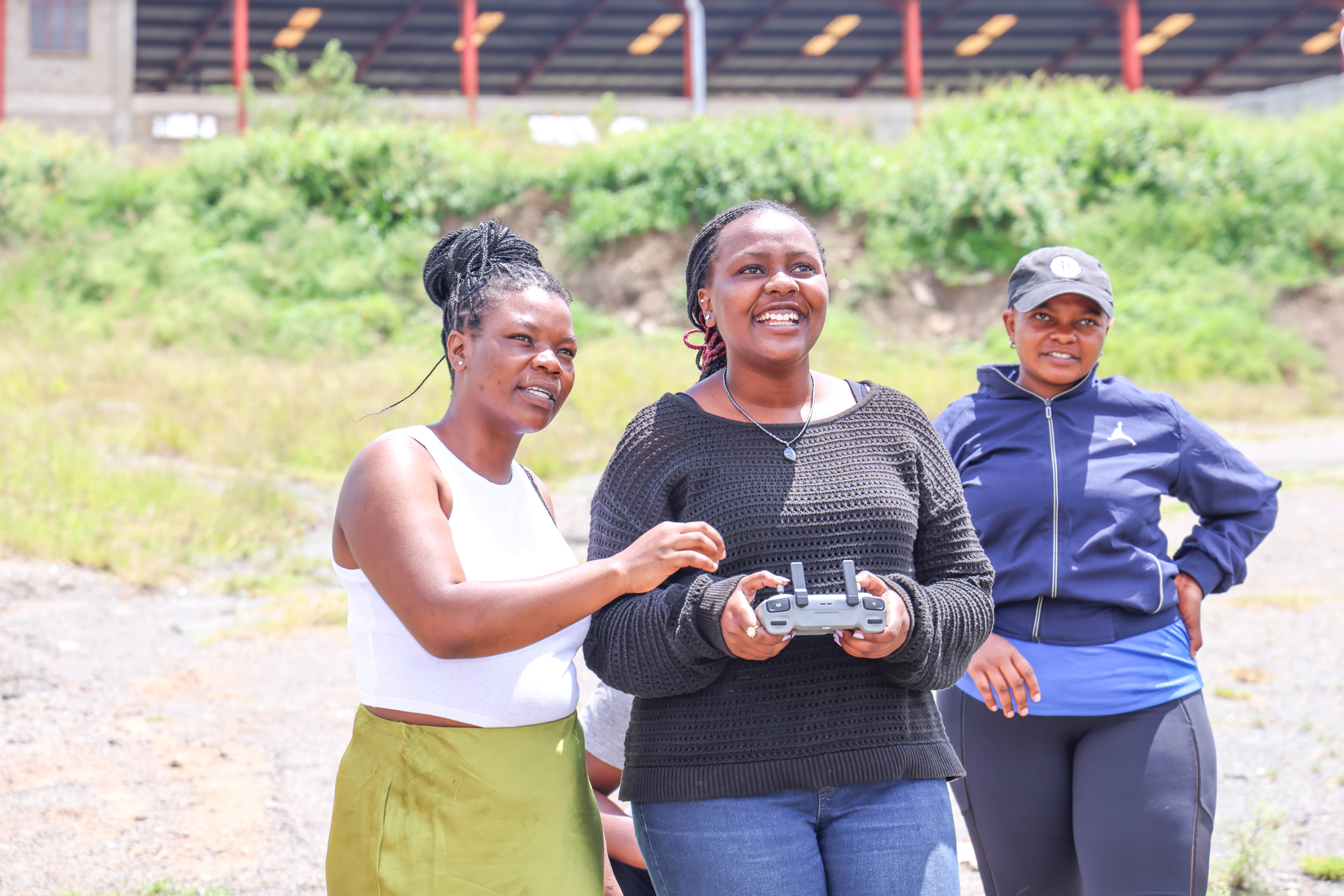
What happens when young people map their own communities? In Mathare, it means more than better data, it means new skills, new confidence, and new pathways into work. This story traces how community-led data is evolving into a tool not just for advocacy, but for livelihoods.

In this piece, Jacob Omondi, Jackline Waithaka, and Jane Wairutu discuss the profound impact of COVID-19 on youth in informal settlements like Mathare, Nairobi. The pandemic has exacerbated job losses and financial instability, particularly affecting those in the informal economic sector, where many young people rely on daily earnings from their businesses.

In Loitoktok, Kajiado County, a women’s group is transforming lives through resilience and innovation. With support from the Next Level Grant Facility under Voices for Just Climate Action, they’ve expanded urban farming and beekeeping, proving the power of collective action in climate adaptation and economic empowerment.
Join our newsletter to stay up to date on news and projects.
By subscribing you agree to our privacy policy and provide consent to receive updates from our organization.
.svg)


